What are Chinese electric car brands?
The term Chinese electric car brands covers manufacturers headquartered in China that design, engineer, and produce battery-electric vehicles (BEVs), plug-in hybrid vehicles (PHEVs), and extended-range electric vehicles (EREVs) for domestic sale and international export. The category spans a wide spectrum: from listed technology companies building premium software-defined vehicles to state-owned manufacturers producing high-volume entry-tier models at price points that restructure competitive landscapes wherever they arrive.
In 2026, this is not a niche segment. China produces more than 60% of the world's electric vehicles by volume. The country exported 2.6 million electrified vehicles in 2025, up from 1.25 million in 2024. More than 40 distinct brands are currently active in international export channels, with meaningful infrastructure — service networks, parts logistics, and homologation certificates — in at least one overseas market.
For a dealer, distributor, or fleet procurement manager outside China, the question is narrower and more practical: which brands have the export infrastructure to support your specific market, at what price point, and with what level of after-sales commitment? This guide maps that directly — by brand, by tier, and by buyer profile.
Why Chinese electric car brands are winning export markets
Three structural advantages explain the shift — not twelve, not a trend piece's worth of narrative. Three.
Battery cost leadership. China produces approximately 77% of the world's lithium-ion battery cells. CATL alone holds 36.8% of the global market. When a Chinese manufacturer builds an EV, the battery — which represents 30–40% of a vehicle's total cost — comes from a vertically integrated supply chain that no European or Korean rival can yet replicate. That cost advantage flows into FOB pricing. It is structural and it is durable on a five-to-ten-year horizon.
Cabin technology at standard specification. A Chinese electric car at $30,000 FOB routinely includes a large rotating touchscreen, over-the-air software updates, Level 2+ driver assistance, and connectivity features that a European rival adds as a premium options package priced at $5,000–$8,000 extra. That difference is visible during a dealer walk-around and it converts retail buyers. The technology is not a gimmick — it has been refined over millions of domestic sales before reaching export markets.
Compressed product cycles. A new model cycle at a European manufacturer takes five to seven years from design freeze to production. Chinese manufacturers have compressed this to 18–24 months. The result: 2026 models reflect 2025 buyer feedback from export markets. RHD suspension calibration, ADAS tuning for European road-sign standards, and localised software interfaces exist in current products because manufacturers acted on importer feedback within one model cycle rather than two.
For an importer, these are not marketing points — they are the inputs to a unit-economics calculation. A Chinese EV at $32,000 FOB gives a Gulf distributor 20–22% gross margin at mid-market retail pricing. The Korean equivalent at the same retail price requires a FOB of $44,000–$46,000 to reach the same margin. That $12,000–$14,000 structural gap is why portfolios are switching.
Tier 1 — Volume leaders with full export infrastructure
These brands have confirmed homologation in multiple markets, RHD production capacity, established parts logistics outside China, and a track record of actual deliveries at scale. If you are new to Chinese EV sourcing — or advising a client who is — start here.
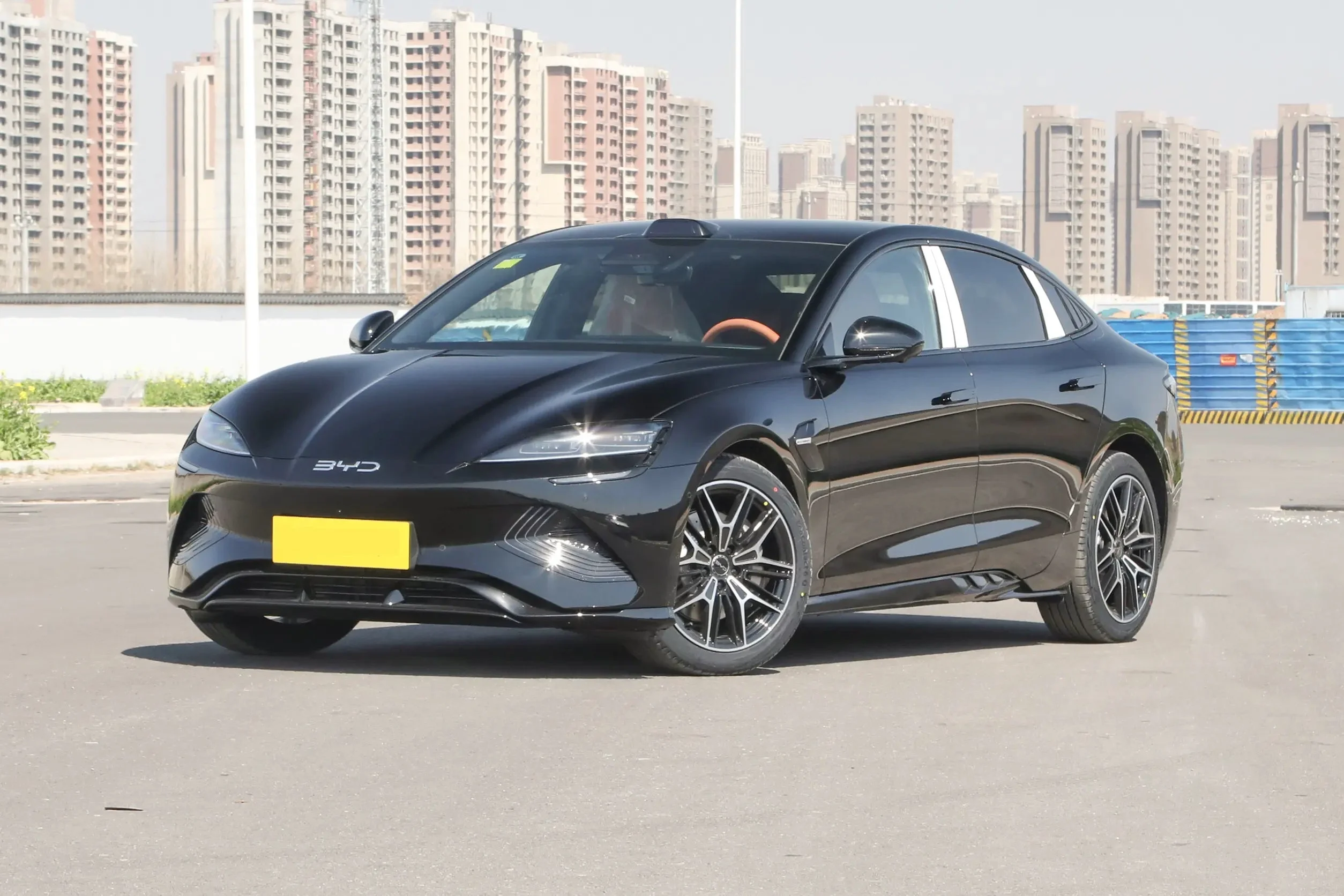
BYD
Founded: 1995 (EV division from 2003). Listed: Hong Kong, Shenzhen. 2025 global deliveries: 4.27 million vehicles.
BYD is the world's top-selling EV manufacturer by volume, having overtaken Tesla in global battery-electric vehicle sales. The export portfolio spans eight body types across four price segments: the Seagull (~$16,000 FOB) at the entry level through to the Yangwang U9 luxury supercar at the top. Between those extremes sit the models most importers are actually ordering: the Atto 3 (compact SUV), Dolphin (hatchback), Seal (mid-size saloon), and Sealion 7 (mid-size SUV).
For importers, BYD's defining advantage is vertical integration. BYD manufactures its own lithium iron phosphate (LFP) cells, battery packs, electric motors, and power electronics. Battery cost volatility does not pass through to FOB pricing the way it does for brands sourcing cells externally. The warranty chain — cell, pack, motor, electronics — is managed by one entity. When a fault code appears 18 months after delivery in a market where BYD has a regional distributor, the resolution path is defined. That accountability structure is worth more than any per-unit saving on FOB price when you are servicing 50 customers.
BYD currently holds dealer and distributor networks in 70+ countries. RHD variants are produced for the UK, Australia, Thailand, Japan, and southern Africa. Euro NCAP five-star ratings are confirmed for the Atto 3, Seal, Sealion 7, and Dolphin. EU anti-subsidy duty: 17.4% (the lowest rate among major Chinese brands).
- FOB range: $16,000–$65,000
- RHD: Yes (confirmed for multiple models)
- Key export markets: Europe, UK, Southeast Asia, Middle East, Australia, Africa
- Homologation: EU (multiple models), UK, Australia, UAE, Thailand
MG (SAIC Motor)
Founded: 1924 (UK original); acquired by SAIC 2007. Parent: SAIC Motor Corporation (state-owned). EV range: MG4, MG5 EV, ZS EV, S5 EV.
MG occupies a structurally useful position in the Chinese EV brand landscape: it carries British brand heritage while being manufactured and engineered by SAIC, China's largest automotive group by revenue. For retail markets where buyer trust of Chinese marques is still building, the MG badge reduces friction at the showroom floor. In the UK, MG consistently ranks in the top 10 of monthly EV registrations. Buyers who will not purchase a BYD will consider an MG — and frequently do.
The export EV range covers most segments. The MG4 (compact hatchback, $19,000–$25,000 FOB) has achieved five-star Euro NCAP ratings and is available with CCS2 charging as standard. The ZS EV (compact SUV, $22,000–$28,000 FOB) is among the best-documented Chinese EVs for importers, with a long track record in the UK and Australian markets. The MG5 EV estate and S5 EV extend coverage into the family SUV segment. All major models are available in RHD.
The trade-off for European importers is the EU anti-subsidy duty rate: SAIC bears the highest rate of any Chinese brand at 35.3%, significantly above BYD's 17.4%. For a $28,000 FOB vehicle, that is a $9,884 additional duty cost per unit before VAT. Run the landed-cost calculation before shortlisting MG for European distribution — it changes the unit economics materially compared to markets without the additional levy.
- FOB range: $18,000–$40,000
- RHD: Yes
- Key export markets: UK, Europe, Australia, Southeast Asia, Middle East, New Zealand
- Homologation: EU, UK, AUS, UAE, NZ
Chery / Omoda / Jaecoo
Founded: 1997. Export brands: Omoda, Jaecoo, Exeed. Parent: Chery Automobile (state-supported, independent).
Chery is China's top independent automotive exporter by unit volume. Rather than selling under the Chery name in most export markets, it deploys sub-brands with distinct positioning: Omoda targets urban mainstream buyers with a modern European aesthetic, Jaecoo targets the SUV and light-off-road segment, and Exeed targets the premium tier. The result is a brand family that can address multiple market segments under different flags — useful for distributors who want range coverage without carrying multiple manufacturer relationships.
The Omoda 5 EV and Jaecoo E5 are the primary export vehicles in 2026. Both carry RHD production options, UAE and Saudi homologation, and confirmed distribution across Southeast Asia, the Middle East, and parts of Africa. The Jaecoo E5 at $22,000–$28,000 FOB is one of the most accessible five-seat SUVs in the export market. EU homologation for the Omoda/Jaecoo lineup is in progress but not confirmed for all models — importers targeting European destinations should request the specific Certificate of Conformity and its issue date before ordering.
- FOB range: $18,000–$38,000
- RHD: Yes (key models)
- Key export markets: Middle East, Southeast Asia, Africa, Latin America
- Homologation: UAE, Saudi Arabia, select SEA markets; EU in progress

Charging infrastructure compatibility — connector standard, network access, and charging speed — must be confirmed for the destination market before ordering.
Tier 2 — Technology-first brands
These brands lead on software platform capability, ADAS sophistication, and powertrain innovation. Their FOB pricing is higher and their export footprint is more selective. For dealers serving buyers who prioritise what the car does over which badge it carries, this is where the conversation starts.
XPeng (XPEV)
Founded: 2014. Listed: NYSE, HKEX. Key export models: G6 SUV, P7 saloon, X9 MPV.
XPeng has the most credible ADAS platform of any Chinese brand in the mid-price segment. Its XNGP (Navigation Guided Pilot) system is among the few Chinese driver assistance systems tested in real-world European driving conditions. The G6 SUV — 800V architecture, ~87.5 kWh battery, ~550 km WLTP, $34,000–$42,000 FOB — is the primary export volume model. The 800V platform means 20-minute fast-charge sessions for meaningful range recovery, which matters for retail buyers comparing charge times against Korean and European rivals.
The XPeng case for distributors is direct: if your buyer pool makes purchase decisions based on technology, the G6 wins showroom comparisons against equivalently priced Korean and European EVs at a lower FOB. The limitation is distribution depth — RHD production is currently limited to select markets, and XPeng's European service network is still developing relative to BYD's or MG's decade-plus head start. Confirm RHD availability and service infrastructure for your specific destination before committing.
- FOB range: $30,000–$52,000
- RHD: Limited (confirm per model and market)
- Key export markets: Europe (select), Southeast Asia
- Homologation: EU (G6, P7)
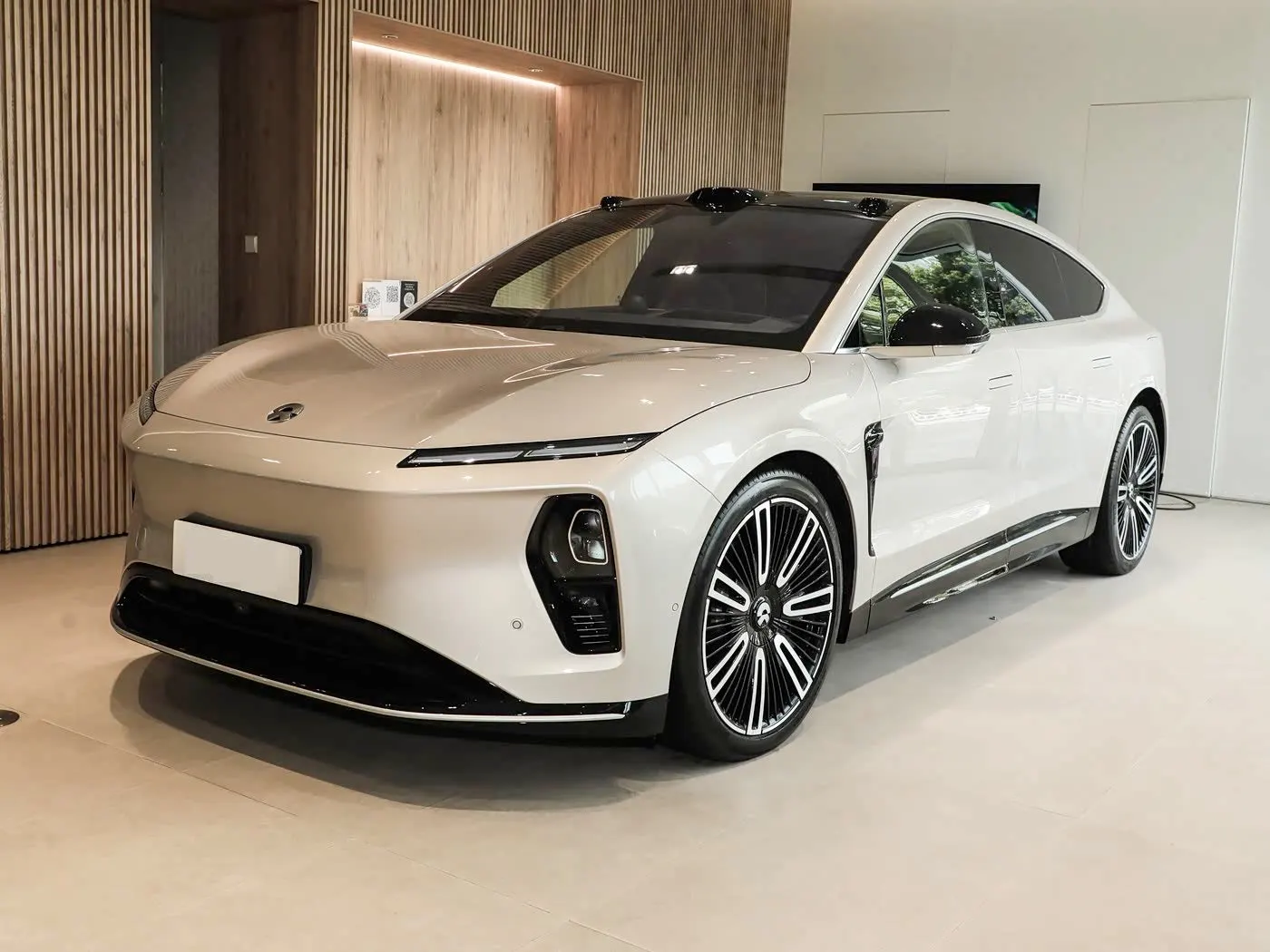
NIO
Founded: 2014. Listed: NYSE, HKEX, SGX. Key export models: ET5 saloon, EL6 SUV, ET9 flagship saloon.
NIO's structural differentiation is its battery-swapping model. Rather than timed charging stops, NIO vehicles use a standardised battery pack that can be exchanged in under five minutes at a NIO Power Swap Station. The model requires NIO-owned infrastructure, which currently exists in Norway, Germany, the Netherlands, Denmark, and Sweden. For markets without swap infrastructure, NIO functions as a premium BEV with Level 2+ ADAS and over-the-air updates. The swap capability becomes a competitive differentiator specifically in markets where NIO has invested in station rollout.
The ET5 (~75 kWh NMC, ~470 km WLTP, $45,000–$55,000 FOB), EL6 (~75–100 kWh NMC, $50,000–$65,000 FOB), and flagship ET9 are the current export range. NIO does not produce RHD variants. For markets requiring right-hand drive — the UK, Australia, Japan, Thailand, and southern Africa — NIO is not a viable option in the current model cycle. For LHD European markets with infrastructure investment and a premium buyer profile, it is one of the strongest Chinese brand propositions.
- FOB range: $45,000–$80,000
- RHD: No
- Key export markets: Europe (Norway, Germany, Netherlands, Denmark, Sweden)
- Homologation: EU
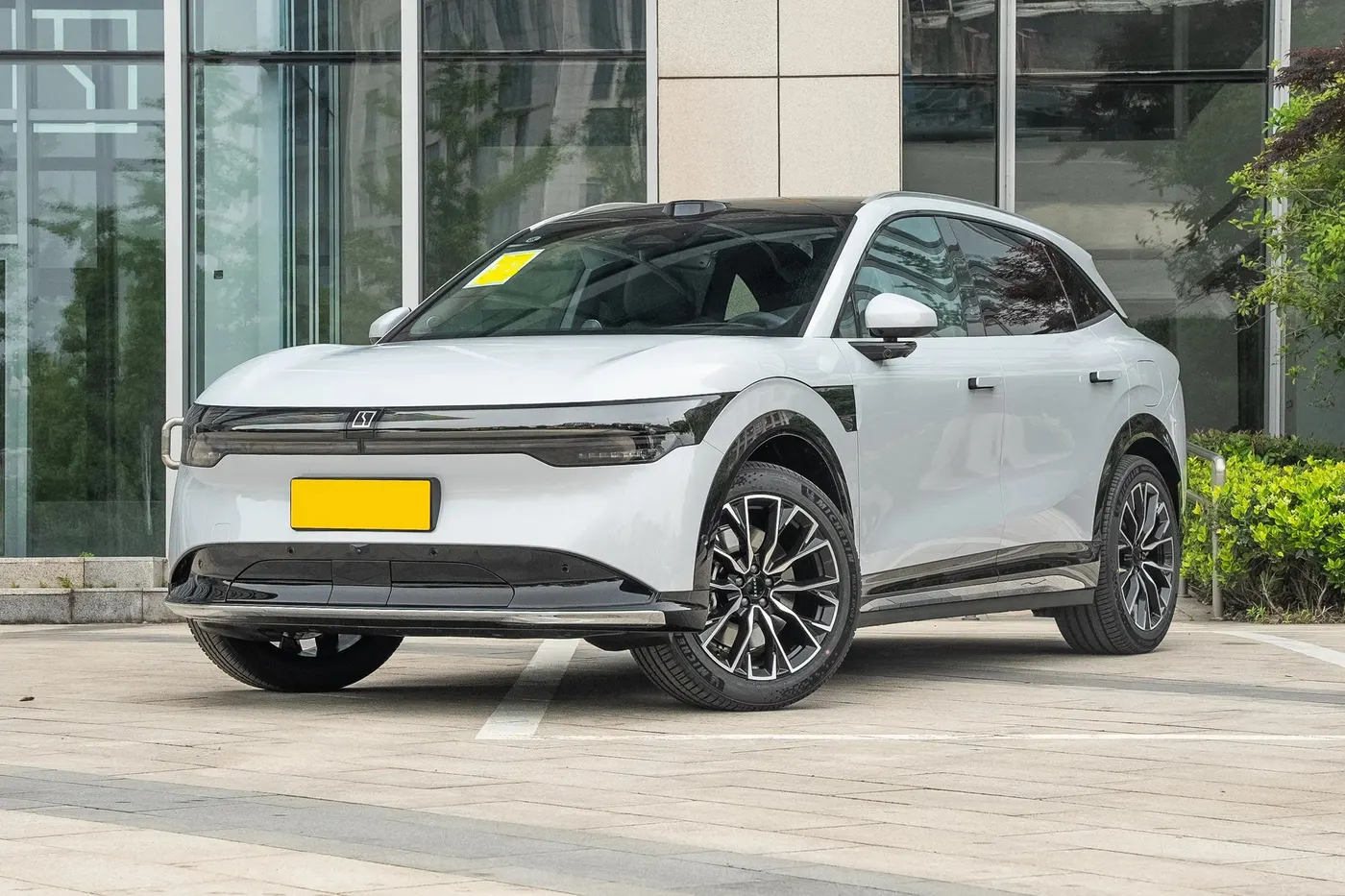
Zeekr (Geely Auto Group)
Founded: 2021. Listed: NYSE (taken private by Geely in 2025). Key export models: 001 shooting brake, 9X SUV.
Zeekr is Geely's premium performance EV brand, built on the SEA (Sustainable Experience Architecture) platform — shared with Volvo. The Volvo connection is not cosmetic: the platform carries Volvo's safety engineering standards, which Zeekr trades on in European markets where Swedish engineering credibility matters to premium buyers. The 001 shooting brake and 9X SUV both carry 5-star Euro NCAP ratings and sit at $40,000–$75,000 FOB.
European distribution is active in select markets. RHD production is limited. For importers in premium LHD markets looking for a Chinese brand with a legitimate Volvo-platform story to tell at the showroom, Zeekr is the most credible option in the segment. Confirm regional distributor infrastructure and parts support before entering a distribution agreement — the brand's export network is still maturing relative to its Geely stablemates.
- FOB range: $40,000–$75,000
- RHD: Limited
- Key export markets: Europe (select), Middle East
- Homologation: EU

Software platform quality — including navigation localisation, OTA update capability, and ADAS calibration for your market — should be evaluated on a sample unit before bulk ordering.
Tier 3 — Emerging and specialist brands
These brands are building export infrastructure at pace. Each has a specific strategic positioning that makes it a viable shortlist option for the right importer. None yet matches BYD or MG on breadth of after-sales coverage, but each offers something the Tier 1 brands do not.
Leapmotor (Stellantis partnership)
Founded: 2015. Listed: HKEX. Stellantis stake: 20%; international distribution managed by Stellantis joint venture.
Leapmotor is structurally the most interesting emerging brand for European importers. Its partnership with Stellantis means European distribution runs through Stellantis's existing dealer network — Citroën, Opel/Vauxhall, Peugeot, Fiat, and Alfa Romeo outlets can stock Leapmotor inventory. The C10 SUV and T03 city car are the initial European models at $18,000–$35,000 FOB. This is the first Chinese EV brand with embedded European dealer distribution rather than a standalone importer setup — which means parts, training, and warranty support operate through Stellantis infrastructure rather than a newly established Chinese entity.
- FOB range: $18,000–$35,000
- RHD: Yes (via Stellantis network)
- Key export markets: Europe, Middle East, Southeast Asia
- Homologation: EU (via Stellantis)
GAC Aion
Founded: 2017 (EV division). Parent: Guangzhou Automobile Group (GAC, state-owned). 2025 deliveries: 400,000+ units.
GAC Aion is China's fifth-largest EV brand by volume. The export focus is Southeast Asia and the Middle East, where the Aion Y and Aion S are the primary models at $18,000–$35,000 FOB. GAC's state-ownership and joint ventures with Honda and Toyota give some importers confidence in manufacturing standards. The Aion brand is building regional distribution infrastructure in Thailand and the UAE; service depth outside those hubs is still limited. For high-volume fleet orders in Southeast Asia, GAC Aion offers competitive pricing and a developing service network.
- FOB range: $18,000–$40,000
- RHD: Partial (confirm per model)
- Key export markets: Southeast Asia, Middle East
- Homologation: UAE, Thailand, select SEA markets
Great Wall Motor / ORA / Tank
Founded: 1984. Export brands: ORA (EVs), Tank (premium off-road). Key export markets: Australia, Middle East, Southeast Asia, Africa.
Great Wall Motor operates multiple brands covering distinct segments. ORA targets entry EV buyers with the Funky Cat (Good Cat) — a retro-styled compact at $20,000–$28,000 FOB that has achieved consistent sales in Australia and the Middle East. Tank targets premium 4x4 buyers with PHEV and extended-range models at $40,000–$55,000 FOB, positioned against Land Rover Defender and Toyota Land Cruiser in markets where those vehicles command strong demand. GWM has committed RHD production for Australia and has shown consistent follow-through on service infrastructure in markets it enters.
- FOB range: $20,000–$55,000
- RHD: Yes (confirmed for key models)
- Key export markets: Australia, Middle East, Southeast Asia, Africa
- Homologation: AUS, UAE, Thailand; EU in progress
Hongqi
Founded: 1959. Parent: FAW Group (state-owned). Key export models: E-HS9 luxury SUV, EH7 executive saloon.
Hongqi is China's oldest car brand and FAW's flagship luxury marque, positioned as an alternative to BMW 7-series and Mercedes EQS. The E-HS9 ($60,000–$80,000 FOB) is a large electric SUV targeting the premium chauffeur and executive market; the EH7 is an executive saloon. The UK is the most ambitious overseas market Hongqi has addressed to date. Service infrastructure outside China is thin — for importers in markets with premium buyer appetite but no established Hongqi entity, the service commitment question must be answered before any distribution agreement.
- FOB range: $60,000–$90,000
- RHD: Yes (E-HS9 confirmed)
- Key export markets: UK, Middle East (limited)
- Homologation: EU (in progress)

Chinese EV manufacturers have invested heavily in automated production lines, which contributes to consistent build quality and competitive unit costs across the brand spectrum.
The structural advantage of choosing BYD over any other Chinese EV brand for a first import order is accountability, not price. BYD's warranty chain — cells, pack, motor, electronics — is managed internally by one entity. When a fault appears 18 months after delivery in a market where BYD has a regional distributor, the resolution path exists and is funded. When the same fault appears on a brand with a China-only warranty entity and no regional service hub, the importer absorbs the cost. At $32,000 FOB per unit across a 20-unit first order, the difference between a defined and an undefined warranty resolution is $640,000 worth of contractual risk. That is the real comparison — not which brand has the larger screen.
Brand comparison: export readiness at a glance
The table below summarises the ten most export-active Chinese EV brands in 2026 by FOB range, drive side, safety rating, homologation status, and geographic reach. Figures are indicative for B2B volumes of 10 or more units. Confirm current pricing and production lead times directly — factory schedules shift quarterly.
| Brand | FOB range | RHD | Euro NCAP | EU homologated | Key export markets |
|---|---|---|---|---|---|
| BYD | $16k–$65k | Yes | 5-star (4 models) | Yes | Global — 70+ countries |
| MG (SAIC) | $18k–$40k | Yes | 5-star (MG4) | Yes | Europe, AUS, ME, SEA |
| Chery / Omoda / Jaecoo | $18k–$38k | Yes | In progress | In progress | ME, SEA, Africa, LatAm |
| XPeng | $30k–$52k | Limited | N/A | Yes (G6, P7) | Europe (select), SEA |
| NIO | $45k–$80k | No | N/A | Yes | Europe — select markets |
| Zeekr | $40k–$75k | Limited | 5-star (001) | Yes | Europe (select), ME |
| Leapmotor | $18k–$35k | Yes | N/A | Yes (Stellantis) | Europe, ME, SEA |
| GAC Aion | $18k–$40k | Partial | N/A | No | SEA, ME |
| GWM / ORA / Tank | $20k–$55k | Yes | N/A | In progress | AUS, ME, SEA, Africa |
| Hongqi | $60k–$90k | Yes (E-HS9) | N/A | In progress | UK, ME (limited) |
For a full landed-cost breakdown including ocean freight, customs duty, and local registration fees for your specific market, use the Import Cost Calculator or Auto Loan Calculator to model total buyer cost.
Which Chinese electric car brand fits your price segment?
The right brand is not the one with the best press reviews — it is the one whose FOB price, dealer margin, and after-sales infrastructure produce a viable business model at the retail price your market will actually pay. Here is how the brand landscape maps to three buyer-facing price segments.
Entry segment — $16,000–$25,000 FOB
Best options: BYD Seagull / Dolphin, MG4, Chery Omoda 5 EV / Jaecoo E5, ORA Funky Cat, Leapmotor T03.
Entry-segment Chinese EVs target markets where adoption is price-driven: Southeast Asia, the Middle East at the fleet level, and emerging markets in Africa and Latin America. Battery capacity typically runs 40–65 kWh LFP. WLTP range is 250–350 km. These vehicles are not underpowered — they are calibrated for urban and suburban use, fleet operations, and ride-hailing deployments where total cost of ownership matters more than range.
The dealer margin opportunity in entry segment depends heavily on your destination's duty structure. In a 5% duty market (UAE, select SEA), a $20,000 FOB vehicle can retail at $30,000–$32,000 with 18–22% gross margin. In a 35% duty market (EU, some models), the landed cost alone consumes the margin room. Calculate before shortlisting.
Best fit: Fleet buyers, ride-hailing operators, markets with active EV incentive programmes, and first-time EV dealer programmes looking for manageable retail price points.
Mid segment — $25,000–$45,000 FOB
Best options: BYD Atto 3 / Seal / Sealion 7, MG ZS EV / S5 EV, XPeng G6, GAC Aion Y Plus, Leapmotor C10, GWM ORA GT.
This is the highest-volume band for independent importers and established distributor networks. Battery capacity runs 60–90 kWh (LFP or NMC). WLTP range covers 350–550 km. Five-star NCAP ratings are available across multiple models. The retail price band in most markets ($40,000–$60,000) is where consumer EV adoption is most active in 2026.
Dealer margin at mid-market retail pricing in the UAE, UK, or Southeast Asia typically runs 18–25% on Chinese brands at this tier — meaningfully higher than Korean or European equivalents at comparable retail prices. This is the segment where most B2B importer programmes are focused and where BYD and MG have the deepest after-sales infrastructure. For new brand relationships, start a sample order at this tier before committing to volume.
Best fit: Independent dealers building an EV range, established importers switching from Korean/European to Chinese brands, distributor programmes covering mainstream retail and fleet simultaneously.
Premium segment — $45,000–$85,000 FOB
Best options: NIO ET5 / EL6, Zeekr 001 / 9X, BYD Tang EV / Denza D9, XPeng X9, Hongqi EH7 / E-HS9.
Premium-segment Chinese EVs require a different due-diligence process from entry and mid-tier imports. At $65,000–$80,000 retail, a service complaint or software issue lands differently than at $35,000. Buyers at this price point expect response times, parts availability, and brand presence that most Chinese premium brands are still building outside China.
The product case is strong on specification and technology. NIO's battery-swap infrastructure and flagship model quality, Zeekr's Volvo-platform engineering, and BYD's Denza D9 MPV are genuine competitive alternatives to European brands in their segments. The distribution infrastructure is still maturing. For premium-segment importers, the question to answer before signing is not whether the car is good — it is whether the brand has invested in your specific market's service network, not just announced plans to do so.
Best fit: Luxury EV dealers in markets with established premium buyer appetite, importers with existing high-end brand relationships and service infrastructure, government and diplomatic fleet procurement where spec level outweighs brand recognition.
How to choose the right Chinese electric car brand for your market
-
1
Define your destination's regulatory requirements before anything else. Homologation, drive side (RHD/LHD), and charging connector standard determine which brands are physically viable in your market. A brand without a Certificate of Conformity for your destination cannot be registered. A LHD-only model in an RHD market is not a retrofit problem — it is a factory re-order. Establish these constraints before evaluating any brand's product advantages.
-
2
Run the landed-cost calculation before shortlisting brands. FOB price is the start of the calculation, not the end. Add ocean freight ($800–$1,800 per unit), import duty (0–35% depending on destination and brand), VAT or GST, port handling, and customs clearance. The resulting landed cost determines what retail price you need to hit your margin target. Use the cost calculator on this site or request a destination-specific breakdown from our team before committing to a brand relationship.
-
3
Evaluate the brand's actual infrastructure in your region — not its website claims. Ask directly: is there a registered entity in your country or a hub country that handles warranty claims? What is the parts lead time from China or a regional warehouse to your location? Who authorises warranty repairs? If the answers are vague or deferred to "we are working on it," factor that into your risk assessment accordingly.
-
4
Request reference contacts from existing importers in comparable markets. A brand with a two-year track record in Thailand or UAE is a different risk profile from one that has announced intentions to enter Southeast Asia. The brand's export team should be able to provide contact details for two importers in markets with similar regulatory and logistics profiles to yours. If they cannot, you are the trial importer — adjust your order size and contractual terms accordingly.
-
5
Order a sample unit before committing to a container. A 1–3 unit sample order covers: PDI defect rate, charging connector compatibility, software localisation quality, navigation accuracy in your market, and real-world range under local driving conditions. The cost of a sample order is the cost of finding problems before they affect 50 customers. For a new brand relationship, this step is not optional.
-
6
Get the commercial terms in writing before the first container. FOB price, production lead time, shipping schedule, MOQ for B2B pricing, pre-delivery inspection requirements, and warranty entity details should all be in the sales contract before any deposit is paid. "Approximately Q3" is not a delivery schedule. Submit an inquiry with your destination, brand preference, and target quantity and we will put together a formal proposal with documented terms.
Ready to shortlist brands for your market?
Tell us your destination, preferred price segment, and target quantity. We match you with the right Chinese EV brand, provide a landed-cost breakdown, and confirm current factory availability. Most importers receive a first response within one business day.
Common questions
Which Chinese electric car brands export to the most countries?
BYD is the most geographically distributed Chinese EV brand, with confirmed sales, service, or distribution in 70+ countries as of 2026. MG (SAIC) has the strongest European dealer penetration. Chery (via Omoda and Jaecoo) leads in the Middle East and parts of Africa and Latin America. For any specific destination, confirm availability and infrastructure directly with the brand's regional export team rather than relying on press announcements.
Which Chinese EV brands offer right-hand drive models?
BYD, MG (SAIC), Chery/Jaecoo, Great Wall Motor (ORA/Tank), Leapmotor (via Stellantis), and GAC Aion (select models) all produce RHD variants. NIO, most of XPeng's core range, and the majority of Zeekr's lineup are currently LHD only. Always confirm RHD availability for the specific model — not just the brand — before taking customer orders. RHD requires a factory build confirmation, not a post-production conversion.
How do Chinese electric car brand FOB prices compare in 2026?
Entry-tier models (BYD Seagull, Leapmotor T03, ORA Funky Cat) start at $16,000–$22,000 FOB. Mid-market models (BYD Sealion 7, MG S5 EV, XPeng G6) run $28,000–$45,000 FOB. Premium brands (NIO, Zeekr) sit at $45,000–$80,000 FOB. All figures are indicative for B2B volumes of 10 or more units. Spot pricing for single units is higher. Use the landed-cost calculator to model total cost for your destination.
Which Chinese EV brand is best for fleet procurement in 2026?
BYD and MG offer the most complete fleet packages: established service infrastructure, telematics support, and fleet-specific warranty terms in multiple markets. GAC Aion is the strongest option for high-volume fleet orders in Southeast Asia. For fleets of 50 or more units, negotiate directly with the brand's export fleet desk rather than through a general distributor — fleet-specific pricing, extended warranty terms, and dedicated delivery scheduling are typically available at that volume.
Do Chinese electric car brands offer competitive warranties?
Most major Chinese EV brands offer 6-year/150,000 km battery and drivetrain warranties as standard — longer than most European or Korean equivalents. The critical variable is whether the warranty is honoured by a registered entity in your destination market or requires the vehicle to be returned to China for assessment. Confirm the warranty entity, claims authorisation process, and average resolution time before selling to fleet customers who will hold you accountable to the warranty promise.
Which Chinese electric car brands are EU-homologated in 2026?
BYD (Atto 3, Dolphin, Seal, Sealion 7), MG (MG4, ZS EV, MG5 EV), XPeng (G6, P7), NIO (ET5, EL6), Zeekr (001, 9X), and Leapmotor (C10, T03, distributed via Stellantis) all hold EU type approval for at least one model as of 2026. Other brands may have partial or in-progress approval — always confirm the specific Certificate of Conformity, its issue date, and which variant of the vehicle it covers before ordering for European delivery.
What is the minimum order quantity for Chinese EV brand B2B pricing?
Most major brands quote B2B pricing at 10 or more units for mid-tier models and 5 or more for premium-segment vehicles. Fleet pricing and dedicated delivery scheduling typically requires 20 or more units. Ordering fewer than five units puts you near retail pricing with no production scheduling priority. Confirm the minimum order quantity directly with the specific brand's export desk — it varies by model, market, and the current production calendar.
How do I verify a Chinese EV brand's after-sales support in my market?
Ask three direct questions: (1) Is there a registered entity in my country, or a hub country that serves my region, which handles warranty claims and parts distribution? (2) What is the confirmed parts lead time from China or a regional warehouse to my location for common service items? (3) Can you provide contact details for two existing importers in markets with a similar regulatory and logistics profile to mine? If any answer is vague, deferred, or unsupported by documents, that is the answer to your question.