
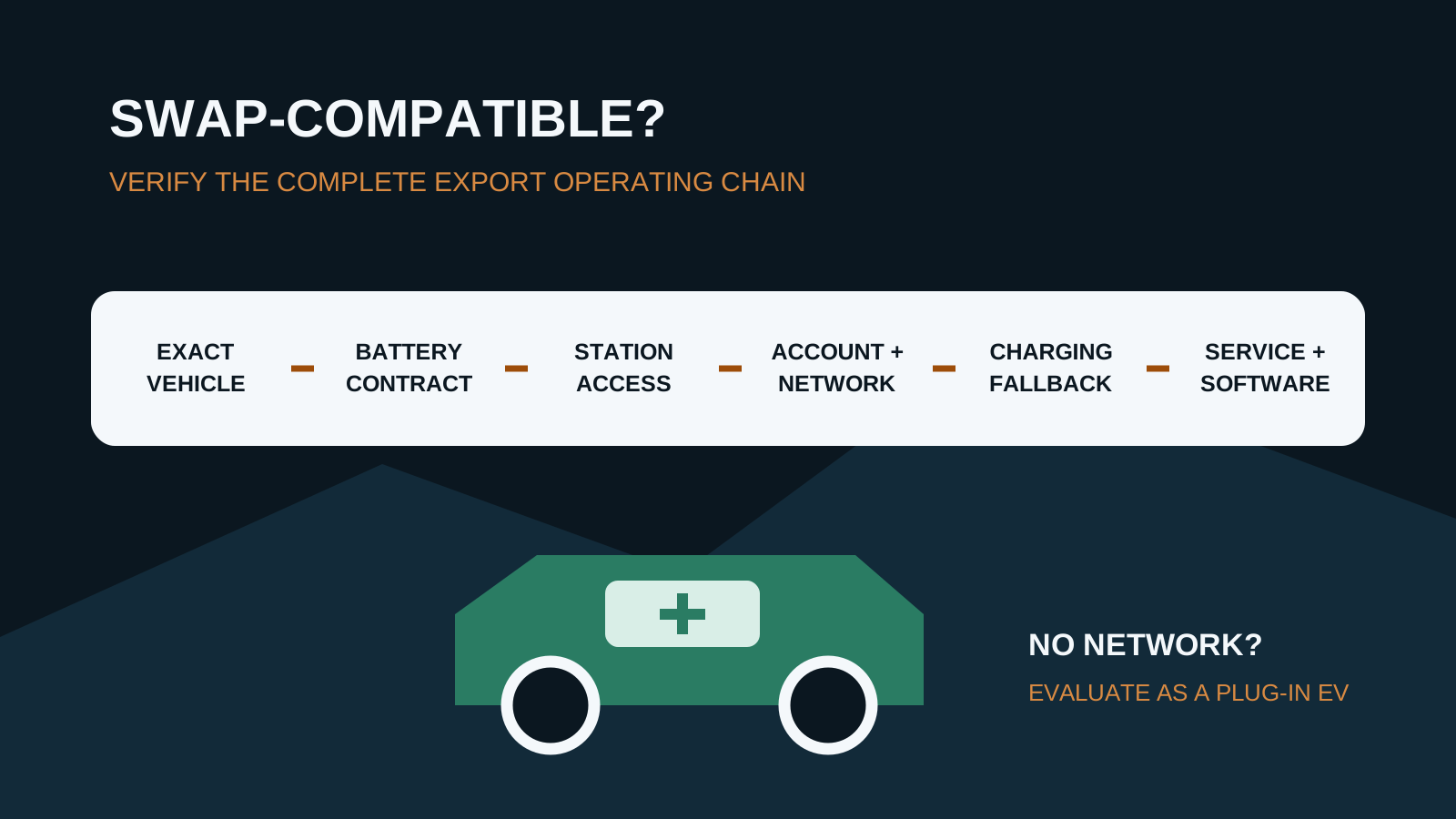
For a battery swap China sourcing decision, do not ask only whether the model is advertised as “swap-compatible.” Verify the exact vehicle, approved battery, battery ownership or subscription, destination station network, account access, charging inlet and protocol, warranty, service, software and export approval. If the destination has no usable swap network, account path or battery contract, evaluate the vehicle as an ordinary plug-in EV. If its normal charging and support case does not work, stop the purchase.
1. Start with the destination, not the swap time
Battery swapping is an ecosystem service, not a detachable feature. A compatible underbody and removable pack do not create a usable service by themselves. The buyer also needs a station that accepts that vehicle and pack, a valid user or fleet account, an enforceable battery contract, working vehicle connectivity and a support organization able to resolve failures.
Write down the destination country, operating area and regular routes before comparing cars. Ask whether the exact VIN and battery are accepted by a live network, whether the destination owner can maintain the account and battery agreement, and whether the vehicle can charge and be supported when swapping is unavailable.
Evidence rule: do not substitute a worldwide station total, a partnership announcement or a demonstration vehicle for a current destination check.
2. Separate NIO, CATL Choco-Swap and other ecosystems
Treat each swap system as its own compatibility domain. NIO Power is a vehicle, station, battery, cloud and account system. CATL’s EVOGO/Choco-Swap uses its own standardized battery blocks, stations and app. Geely/LIVAN and commercial-vehicle operators have additional architectures. A vehicle designed for one is not automatically admitted to another.
NIO has announced cooperation with Geely and Changan on standards, stations, swappable models and battery asset management. That supports future development; it does not prove that a named partner model can use a particular NIO station today. CATL describes broad platform compatibility, but limits station interoperability to vehicles that actually use Choco-SEB battery blocks. Ask for current model/variant approval, not an ecosystem logo.
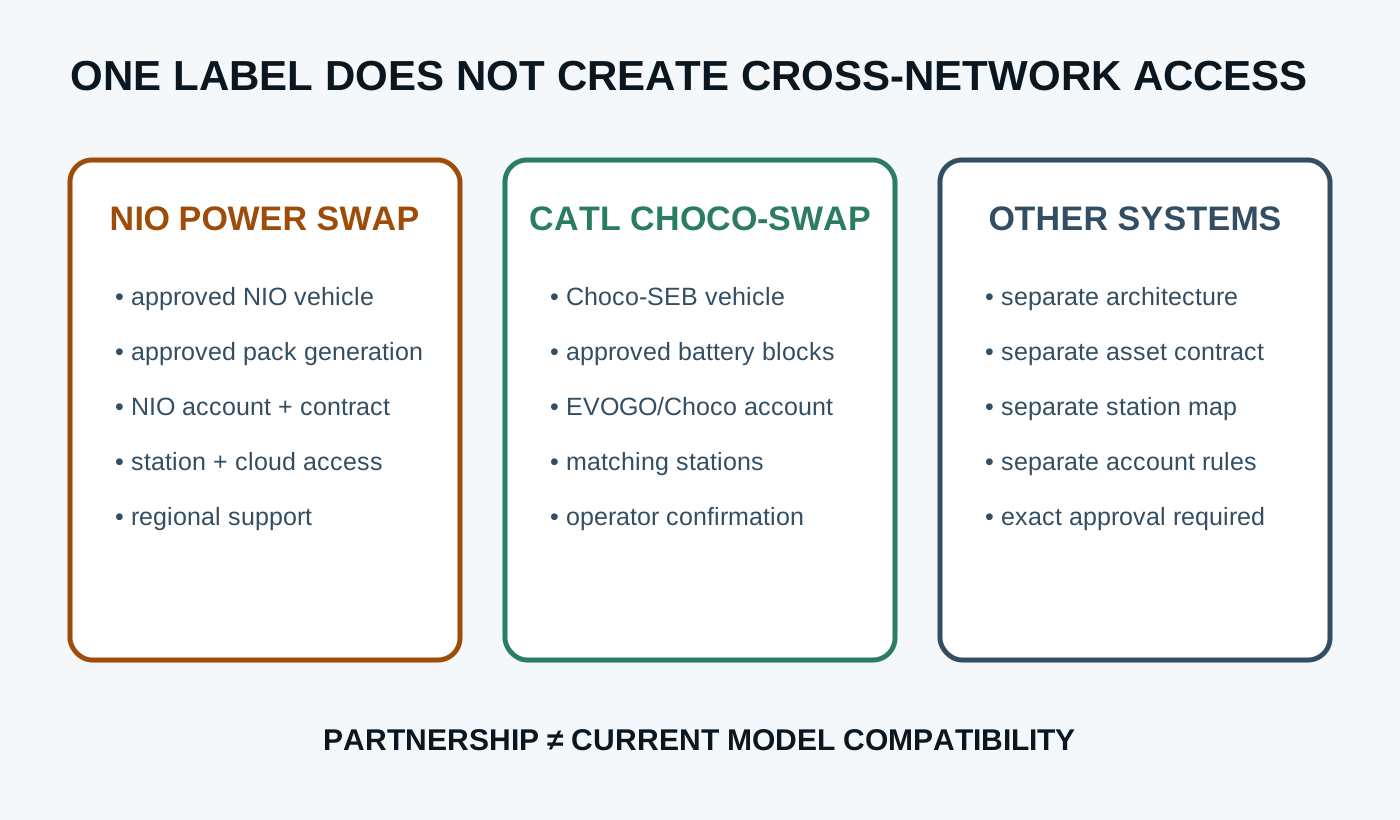
Record the exact compatibility identity
- Manufacturer, model, model year, trim, VIN and domestic or export version.
- Battery maker, pack family, capacity, pack identifier and ownership status.
- Swap-system and approved station generation.
- Current manufacturer or network compatibility confirmation.
- Charging inlet, AC/DC protocol, electrical limits, software and account region.
3. Prove who owns the battery and whether the contract crosses borders
A full-purchase vehicle normally transfers with its installed battery, subject to the sale documents and local rules. A Battery-as-a-Service vehicle separates vehicle ownership from the right to use a network-owned battery. The buyer therefore needs both a valid vehicle transfer and a valid battery agreement.
NIO’s current European BaaS FAQ says activation is limited to countries where NIO is active and lists Norway, Germany, the Netherlands, Sweden and Denmark. It tells parties selling outside those countries to contact NIO about changing the BaaS agreement to a full-purchase contract. Do not assume that a domestic or European subscription travels with a privately exported car.
- Identify whether the installed battery is owned, leased or subscribed.
- Check for unpaid balances, liens and transfer restrictions.
- Confirm who initiates the transfer and whether the destination address is eligible.
- If BaaS cannot continue, obtain the operator’s battery-purchase process and authorization.
- State which pack must be installed at handover.
Do not pay for a BaaS vehicle as if the battery were included until the contract and asset records say it is.
4. Test station access, account access and connectivity as one chain
NIO’s EL7 user manual shows that a swap order uses the vehicle or NIO App, validates location and manages a queue through the account. Vehicle-to-station communication is part of the operation. A mechanically compatible car can therefore fail when account transfer, phone registration, payment, maps, telematics or connectivity do not work after export.
Ask the operator—not only the seller—to confirm the VIN, destination account, address, phone and payment eligibility; vehicle SIM/eSIM and cloud access; station-map and ordering function; model/pack/station generation; and the support route for a rejected or interrupted swap. Save the written answer and refresh it immediately before order confirmation.
5. Build a normal-charging fallback before valuing swap access
A swap-compatible EV still needs a practical plug-in plan. NIO’s European manuals describe AC and DC charging and tell users to match the connector with compatibility identifiers at the inlet. A China-market vehicle may have a different inlet, protocol, onboard charger, software region or certification from an official export version.
Use the GB/T vs CCS2 vs CHAdeMO compatibility guide to verify physical inlet, communication protocol, electrical limits and a sustained real charge test. A passive adapter does not prove negotiation, locking, thermal control or safe charging. Retain inlet photos, labels, build sheet, manual, charger specifications and continuous AC/DC test records.
6. Verify warranty, service, software and parts independently
Swap access does not replace after-sales support. Obtain written confirmation of warranty geography, high-voltage service, battery responsibility, diagnostic access, parts, software updates, maps, connected services, recalls and roadside recovery.
| Failure or need | Evidence required | Stop condition |
|---|---|---|
| Vehicle fault | Authorized workshop or documented independent route | No diagnostics or parts |
| Battery warning | Contract party and high-voltage contact | Ownership disputed |
| Swap rejected | Network account and escalation path | No destination operator support |
| Charging fault | Compatible equipment and service procedure | No reliable AC/DC fallback |
| Software lock | Transfer and regional activation procedure | Buyer cannot bind the vehicle |
| Recall/update | VIN-level campaign and software route | No applicable remedy |
A seller’s willingness to ship parts is not the same as an authorized warranty or software channel.
7. Demand an export evidence pack for the exact VIN
Connect the swap decision to the Chinese EV pre-shipment inspection checklist. Before the balance or release, require VIN and variant identity; battery identity and contract; current model/pack/station approval; destination account approval; current route check; charging tests; warranty/service/software contacts; and export, conformity and registration documents.
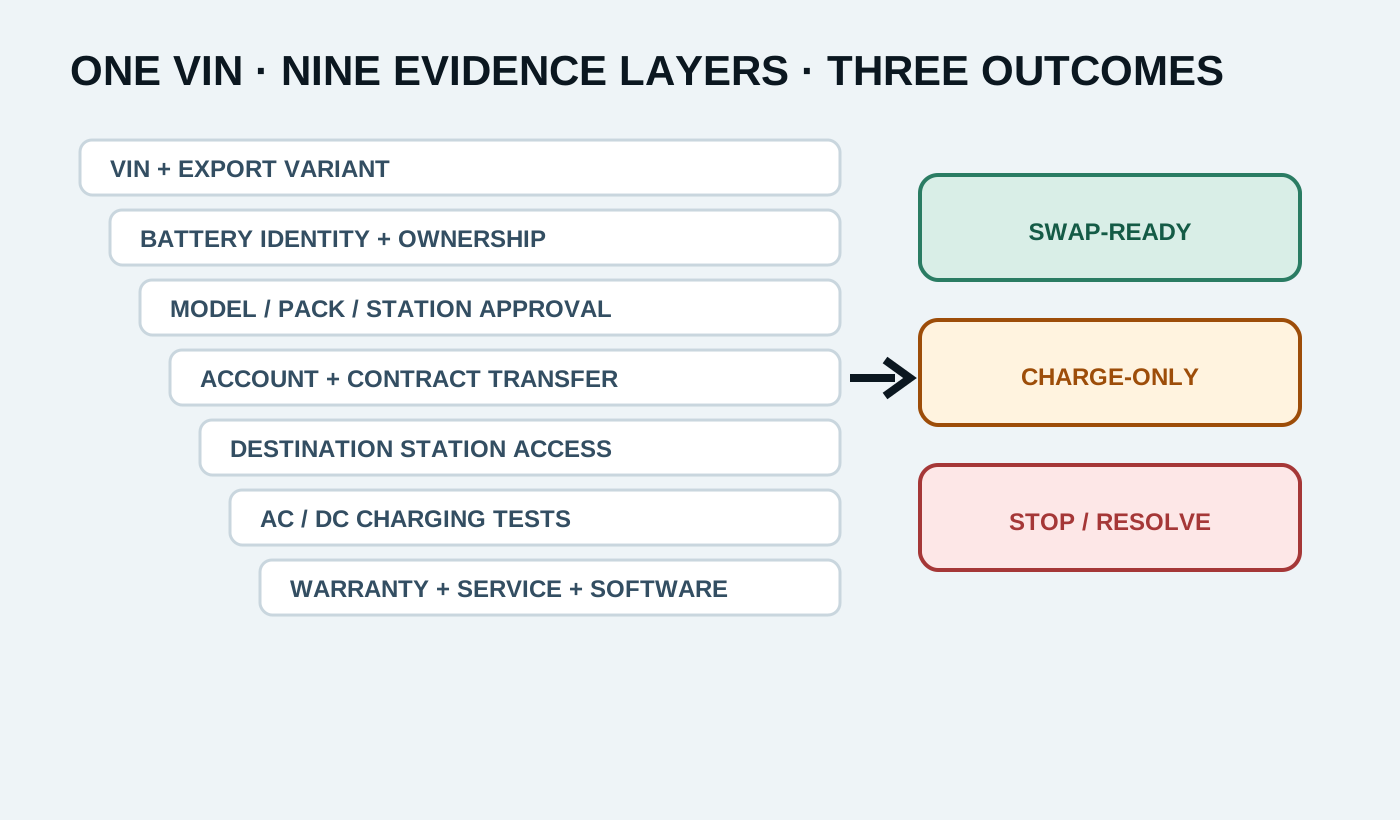
The seller should not mark operator approval as “to be confirmed after delivery.” If the commercial value depends on swapping, that approval belongs before payment and shipment.
8. Use a three-outcome import decision
| Outcome | Required evidence | Buyer action |
|---|---|---|
| Swap-ready | Exact vehicle and pack approved; usable destination stations; valid account and contract; charging and support pass | Proceed to unit inspection and commercial review |
| Charge-only candidate | Swap chain unavailable, but owned battery, charging, compliance, service and software are acceptable | Revalue as an ordinary EV; do not pay a swap premium |
| Stop | Ownership unresolved, no contract, charging fallback, account, software or support path | Reject or resolve before any deposit |
A future station plan or cooperation announcement does not create a swap-ready vehicle. Only current destination-specific access does.
9. Send a requirement brief, not a generic model request
When reviewing NIO vehicles or available Chinese EV listings, send the destination, quantity, exact model/trim, battery arrangement, charging environment and required support evidence. Ask the sourcing team to separate confirmed facts from items requiring manufacturer or operator approval.
Request a vehicle-and-network evidence review
Send the destination, model, VIN or build specification, battery arrangement and planned charging routes. We will structure the sourcing evidence request without promising station access or manufacturer approval.
Request an EV sourcing reviewFrequently asked questions
Can an imported NIO use battery swap stations outside China?
Only if the exact vehicle and battery are accepted by a live destination network and the owner can maintain the required account and battery agreement there. Confirm the VIN and destination directly with NIO before purchase.
Does “swap-compatible” mean a car can use any battery swap station?
No. NIO, CATL Choco-Swap and other operators use distinct vehicle, battery, station, cloud and account systems. Cooperation or common standards do not prove present access.
What happens to a BaaS contract when the vehicle is exported?
The original owner may need to initiate a transfer, the new owner may need an eligible address and account, or the operator may require conversion to full battery purchase. Obtain written approval before handover.
Can I use the car normally if no swap station exists at the destination?
Possibly, but evaluate it as a conventional plug-in EV. Verify the inlet, charging protocol, electrical limits, charger access and sustained AC/DC tests. If charging or service fails, stop.
What evidence should I request before paying?
Request VIN and variant identity, battery ownership and pack records, operator compatibility, account transfer approval, destination station access, charging tests, warranty/service/software support and export documents.
Sources and current verification
- NIO Power — chargeable, swappable and upgradeable power system
- NIO Europe — BaaS and ownership-transfer FAQ
- NIO Power Europe — swap access and dealer-transfer FAQ
- NIO EL7 user manual — account and swap operation
- NIO ET7 EU manual — AC/DC charging operation
- NIO — Geely and Changan swap cooperation context
- CATL — EVOGO modular battery swap solution
- CATL — announced Choco-Swap models and ecosystem partners