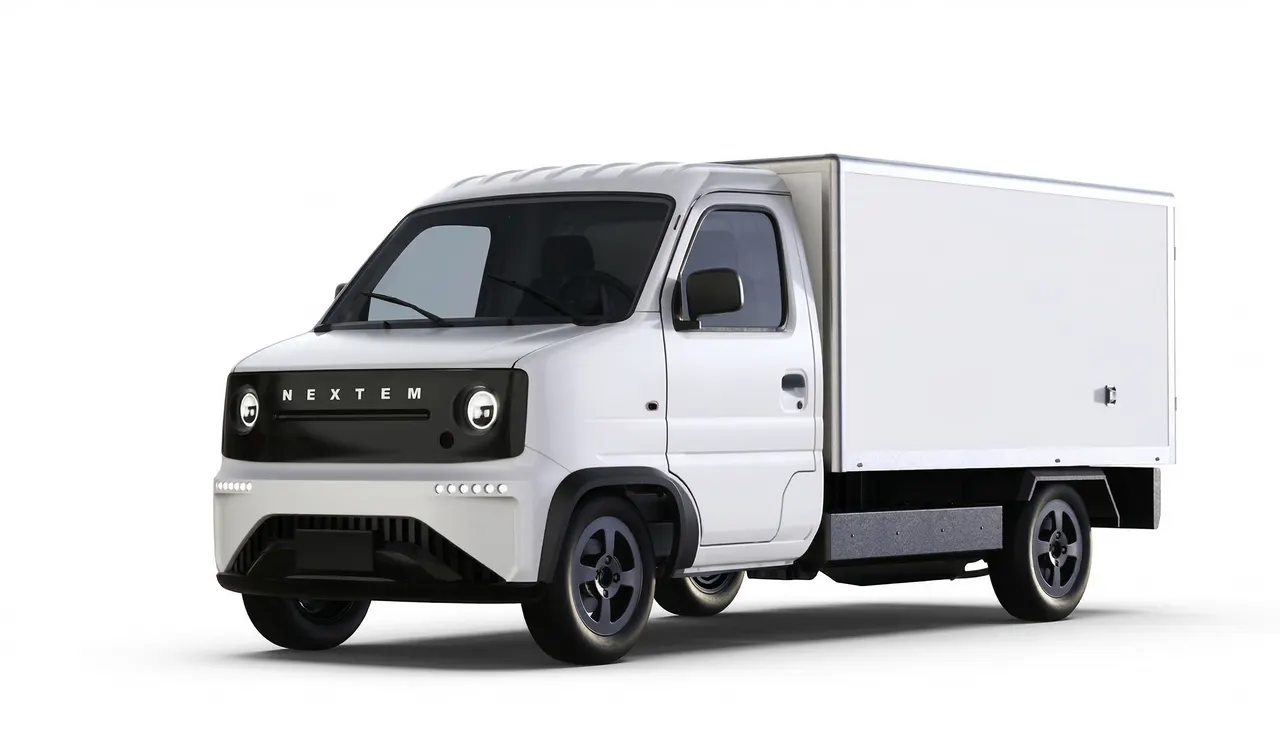
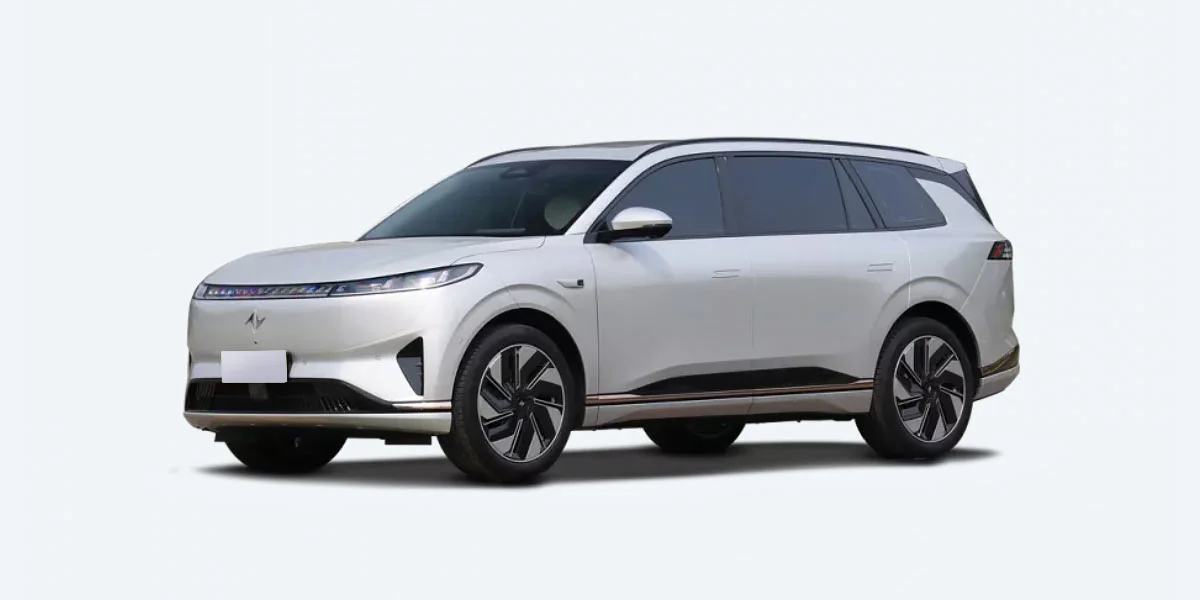
What counts as a Chinese electric truck?
A Chinese electric truck covers three distinct commercial products: battery-electric pickup trucks (Geely Radar RD6, Maxus T90 EV, GWM Poer EV), light cargo trucks and vans under 3.5 tonnes GVW, and heavy freight trucks — the tractor units and rigid trucks that BYD and Sany now export at scale. All three segments share the same supply-chain advantage: Chinese LFP battery production costs that undercut every other manufacturing base.
The scale difference from the rest of the world is not incremental. Chinese companies accounted for roughly 80% of the approximately 90,000 electric cargo trucks sold globally in the most recent full year, and electric trucks reached 22% of heavy-duty truck sales inside China in the first half of 2025 — against roughly 1% in Europe, India, and the US. Volvo, the leading Western maker, has delivered about 5,000 electric trucks across 50 countries in total.
For a dealer or fleet buyer, this means the deepest catalogue, the shortest production queues, and the most field-proven electric truck platforms are Chinese. The questions that matter are which segment fits your market, what the vehicles land at, and what compliance work stands between a signed order and a registered truck. This guide works through all three.
Most import conversations we see start with passenger EVs, because that is where the media coverage is. The freight and truck segment is the bigger structural opportunity for B2B buyers. China's lead in electric trucks — 80% of global sales, against roughly 50% in passenger EVs — is wider than its lead in cars, and Western competition is thinner: nine Chinese firms control the cargo segment while Volvo's cumulative global deliveries total around 5,000 units. A dealer who builds electric truck sourcing capability in 2026 is competing against far fewer established rivals than one adding another passenger EV line.
Pickup vs. light cargo vs. heavy freight: pick your segment first
The three segments have different buyers, different compliance routes, and different economics. Choosing the segment before choosing the model saves weeks of unfocused quoting.
| Segment | Typical price | Battery | Target buyer | Compliance route |
|---|---|---|---|---|
| Electric pickup | $18,000–$52,000 | 60–100 kWh | Dealers, fleet utility, mining and agri operators | Passenger/light vehicle type approval (HS 8703/8704 by config) |
| Light cargo truck | $15,000–$30,000 FOB | 20–80 kWh | Last-mile logistics, municipal fleets | Light goods vehicle approval (HS 8704, under 3.5t GVW) |
| Heavy freight truck | ~2× diesel equivalent upfront | Up to ~1 MWh, battery-swap options | Freight operators, ports, mining, drayage | Heavy goods vehicle approval; project-level procurement |
Pickups are the retail-friendly entry point. They sell through dealer networks, and RHD variants exist for several models. Light cargo trucks are fleet purchases with route-economics buyers — we cover that segment in detail in our Chinese electric mini truck guide. Heavy freight is a project sale: charging or battery-swap infrastructure, financing, and duty-cycle modelling come with the deal. Nearly 40% of China's electric heavy-duty trucks use battery swapping rather than plug charging, which is a structural answer to the depot-charging problem that stalls Western fleet electrification.

Fleet deployment is where electric truck economics are proven — Chinese operators report double-digit operating cost savings against diesel.
Top Chinese electric pickup and truck models in 2026
Models with active export programs and delivered units outside China — not concept announcements. Prices are indicative retail or FOB estimates from published market data; confirm current factory pricing for your market and volume.
| Model | Type | Power | Range (rated) | Indicative price | RHD |
|---|---|---|---|---|---|
| Geely Radar RD6 | Pickup | 272 hp | 346–610 km CLTC | from ~$25,000 | Yes |
| SAIC Maxus T90 EV | Pickup | 177 hp | ~354 km WLTP city | ~$50,000 (EU/UK retail) | Yes |
| GWM Poer EV | Pickup | 204 hp | ~405 km CLTC | ~$30,000–$40,000 | Selected markets |
| JAC T9 Hunter EV | Pickup | 201 hp | ~280–300 km | ~$42,000 | Yes |
| Foton Tunland EV | Pickup | 174 hp | ~530 km CLTC | ~$52,000 | Limited |
| Dongfeng Rich 6 EV | Pickup | 163–177 hp | ~350–450 km CLTC | ~$40,000 | No |
| BYD (freight range) | Heavy/medium freight | Project spec | Duty-cycle dependent | Project quote | Project orders |
Geely Radar RD6 — the value benchmark
The RD6 is the price-to-capability reference point in the segment: 272 hp, up to 610 km CLTC in the long-range variant, and a starting price around $25,000 in its home market. It is a monocoque lifestyle-and-work pickup rather than a heavy-duty ladder-frame truck, which suits dealers selling to trades, farms, and light fleet buyers. RHD production exists for Australia and Southeast Asia. For a dealer building an electric pickup line from zero, this is the model to quote first.
SAIC Maxus T90 EV — the proven exporter
The T90 EV was one of the first Chinese electric pickups sold in Europe, and it remains the model with the longest export track record — UK, Ireland, Norway, Australia, and New Zealand deployments, factory RHD, and an 8-year battery warranty per manufacturer documentation. European retail pricing near $50,000 reflects local duty and distribution margin, not FOB cost; direct-import economics into other markets look considerably better. Its limitation is a rear-wheel-drive-only layout and modest towing spec against diesel rivals.
JAC T9 Hunter EV — the fleet workhorse case
JAC's T9 Hunter EV takes the conventional ladder-frame route: a proven diesel platform electrified, with around 201 hp and a working range near 300 km. JAC has decades of commercial vehicle export history in Latin America and the Middle East, which shows in parts availability and distributor support. Where the buyer is a fleet manager rather than a retail customer, that support network is usually worth more than a spec-sheet advantage.
BYD and Sany — the freight heavyweights
Heavy electric freight is a different purchase process, but it is the segment where Chinese dominance is most complete: BYD and Sany lead a market where nine Chinese firms control global sales. BYD ships electric trucks to Italy, Poland, Spain, and Mexico. A typical long-haul freight truck carries close to 1 MWh of battery, and CATL claims its truck battery systems cut transport costs by around 35% per ton-kilometre against diesel. Freight deals are project sales — duty-cycle analysis, charging or swap infrastructure, and financing come as a package. If your business is drayage, port logistics, or mining haulage, start the conversation at the project level, not the unit level.

Depot charging suits light cargo routes; heavy freight in China increasingly uses battery swapping — nearly 40% of electric heavy trucks there swap rather than plug.
Operating cost vs. diesel: what the numbers actually say
The commercial case for a Chinese electric truck rests on operating cost, because the upfront price of a heavy electric truck is typically about twice its diesel equivalent. The offset comes from energy and maintenance.
- Fleet-reported savings: Chinese fleet operators report electric freight trucks cost 10–26% less to run than diesel models overall.
- Energy cost per ton-kilometre: CATL claims up to 35% lower transport cost per ton-km for its truck battery systems — treat this as a manufacturer figure and model your own energy prices.
- Maintenance: no engine oil, no DPF, no gearbox service on most platforms; brake wear drops with regeneration. Savings scale with utilisation — a truck running 100,000 km per year recovers the price premium far faster than one running 20,000 km.
- Battery life: LFP packs typically last 8–10 years or 200,000+ km, and 8-year battery warranties are standard on export models per manufacturer documentation.
The break-even calculation is destination-specific: diesel price, electricity price, duty, and annual mileage move the answer more than the vehicle spec does. Model it with your own market numbers before quoting total cost of ownership to a customer — the auto loan calculator covers the financing side of that model.
CLTC vs. WLTP: reading Chinese range figures correctly
Chinese manufacturers quote CLTC range, which runs optimistic against the European WLTP cycle — typically by 15–25% in most cases. Under full payload in real-world conditions, plan on 60–70% of the CLTC figure. A pickup rated 500 km CLTC is a 300–350 km working truck under load. That is sufficient for most fleet duty cycles, but quote customers the working figure, not the brochure figure — the trust cost of an over-promised range is far higher than the sales cost of an honest one.
Specs to verify before placing an order
Payload and towing under the export homologation. Ratings can differ between the Chinese domestic certificate and the export type approval for the same vehicle. Request the payload, GVW, and braked towing figures as they appear on the destination-market approval documents — those are the numbers your customers can legally use.
Charging standard. Domestic Chinese trucks use GB/T connectors. Export variants for Europe and Australia should ship with CCS2 from the factory. Confirm the connector on the export spec sheet, and for DC fast charging confirm the actual peak charge rate under load — some budget models fast-charge far slower than the segment leaders.
Certification of components, not just the vehicle. Tyres need E-mark certification for European registration; lighting, glazing, and mirrors have their own UN ECE requirements. Western fleet expectations also include features Chinese domestic buyers often skip — confirm ADAS, tachograph provision (for EU commercial use), and stability control are present on the export build.
Warranty pathway. An 8-year battery warranty is only worth what the claims process costs you. Confirm in writing which entity honours warranty claims in your market and what the parts lead time from China is. If the answer is vague, price that risk into your margin.
Telematics compatibility. Fleet buyers will ask whether the truck's telematics feed their existing fleet management system. Confirm 4G band support for your market and whether the manufacturer's platform exposes an API — some domestic platforms do not, without a separate commercial agreement.
Source your electric truck line today
Tell us your market, segment — pickup, cargo, or freight — target quantity, and required drive configuration. We confirm factory availability, export-spec documentation, and landed cost for your destination. Response within one business day.
Import considerations: duty, homologation, and lead times

The gap between FOB and landed cost is typically 25–45% — build the full calculation before quoting anyone.
Duty rates by market
Electric trucks classified as goods vehicles (HS 8704) generally face lower and simpler duty than Chinese passenger EVs. Classification is the single biggest lever on your landed cost.
| Market | Typical rate | Notes |
|---|---|---|
| UAE | 5% | Flat rate on CIF value. No EV-specific surcharge. |
| UK | 6.5% | Light commercial vehicles (HS 8704) — distinct from rates applied to Chinese passenger EVs. |
| EU | 6.5%+ (MFN base) | Pickups may classify as 8703 or 8704 depending on configuration — the anti-subsidy duties on Chinese BEV passenger cars apply to 8703 classifications. Broker classification is essential. |
| Australia | 5% | Plus 10% GST on CIF + duty. ADR compliance required; RHD models only. |
| Thailand | 20–40% | Varies by GVW and HS code; EV incentive schemes can reduce effective rates for qualifying vehicles. |
| South Africa | 20–25% | Plus 15% VAT. SARS classification determines the applicable rate. |
| United States | 100%+ | Tariffs plus FMVSS requirements make direct import commercially unviable in 2026. |
The pickup classification trap. A double-cab pickup with rear seats can be classified as a passenger vehicle (HS 8703) rather than a goods vehicle (HS 8704) in some jurisdictions — and in the EU that moves it from the 6.5% goods rate into the passenger-EV duty regime, a swing worth thousands of dollars per unit. Have a licensed customs broker in the destination country classify the exact configuration before you calculate any landed cost. The opinion costs under $200 and takes days; the wrong assumption costs the whole margin.
Homologation by market
- EU: UN ECE whole-vehicle type approval or national individual approval. Confirm the specific approval number for the export variant, not the brand's general claim.
- UK: GB type approval; the IVA route through DVSA covers non-type-approved models — allow 8–16 weeks.
- Australia: ADR compliance assessment across 14+ categories; RHD mandatory.
- UAE: ESMA certification mandatory for commercial sale.
- Southeast Asia: country-specific — TISI in Thailand, and AFTA origin rules can reduce duty for qualifying builds. Use a local import agent.
RHD availability
Factory RHD exists for the Maxus T90 EV, Geely Radar RD6, and JAC T9 Hunter EV. Most other models — and most freight trucks — are LHD-only. Post-production conversion invalidates type approval for commercial road vehicles and is not a viable route. RHD orders add production lead time; confirm the schedule in writing before taking customer deposits in RHD markets.
Lead times
For a confirmed B2B order of 10+ units: 45–90 days factory production, 18–35 days ocean freight, 5–14 days inspection and clearance. Plan on 10–18 weeks from signed order to delivered vehicles, plus 3–6 weeks for RHD or special bodywork. Freight-truck project orders run longer and are quoted per project.
How to source the right Chinese electric truck for your market
-
1
Fix the segment before the model. Pickup for dealer retail, light cargo for last-mile fleets, heavy freight for logistics projects. The segment determines the compliance route, the buyer profile, and which factories to approach. A one-page requirement brief — segment, drive side, payload, route profile, quantity — cuts weeks off the quoting cycle.
-
2
Confirm type approval for your destination with a document, not a claim. Ask for the approval reference number for the exact variant. "Approval in progress" is a timeline risk — get a written date and buffer it by 50% before it enters your procurement plan.
-
3
Classify the HS code with a local broker before pricing anything. Especially for double-cab pickups, where 8703 vs. 8704 classification can swing duty by thousands per unit. This is the cheapest due diligence in the whole process.
-
4
Build the full landed cost from FOB. Ocean freight, marine insurance, duty on CIF, VAT or GST, port handling, clearance, local delivery. Expect landed cost 25–45% above FOB depending on destination. Use the auto loan calculator if the deal involves financing.
-
5
Model the diesel comparison with local energy prices. The 10–26% operating-cost advantage reported by Chinese fleets used Chinese electricity and diesel prices. Rebuild the calculation with your market's rates and your customer's annual mileage — that number closes fleet deals, and it must be yours, not a brochure's.
-
6
Order a sample unit and run it for a month. Charging compatibility, software localisation, range under real load, cab fit for your market's drivers — a spec sheet answers none of these. For a new brand relationship the sample unit is the cheapest risk mitigation available. Submit an inquiry to arrange a sample for your target model.
-
7
Verify the parts and warranty pathway before taking customer orders. Who honours claims in your market, what is the parts lead time, is there a regional hub? A truck off the road waiting for a motor controller has a daily cost your customer will quote back to you. Ask these questions with the same rigour as the price.
Common questions
How much does a Chinese electric truck cost?
Electric pickups run approximately $18,000–$52,000 depending on model and market: the Rely R08 starts near $18,300 in China, the Geely Radar RD6 around $25,000, while European retail for the Maxus T90 EV reaches $50,000. Light cargo trucks start around $15,000 FOB. Heavy freight trucks typically cost about twice their diesel equivalent upfront, recovered through operating savings. Factory pricing shifts quarterly — confirm current numbers for your volume before quoting.
Are Chinese electric trucks reliable?
The deployment record is now the largest in the world: Chinese firms took roughly 80% of global electric cargo-truck sales in the latest full year, and 22% of heavy-duty trucks sold in China are electric. LFP battery packs typically last 8–10 years or 200,000+ km, with 8-year battery warranties standard on export models per manufacturer documentation. The practical reliability risk is parts and service availability in your market — verify that infrastructure before ordering, because a reliable truck with a 6-week parts lead time is still a fleet problem.
Which Chinese brands make export-ready electric trucks?
Pickups: Geely (Radar RD6), SAIC Maxus (T90 EV), GWM (Poer EV), JAC (T9 Hunter EV), Foton (Tunland EV), Dongfeng (Rich 6 EV). Light cargo: BYD, JAC, DFAC, Foton. Heavy freight: BYD and Sany lead, with BYD shipping to Italy, Poland, Spain, and Mexico. Export support depth — type approval coverage, parts hubs, RHD availability — varies significantly by brand and destination. Verify for your specific market rather than relying on a general export claim.
Can I import a Chinese electric truck into the United States?
Practically, no. Tariffs exceeding 100% on Chinese electric vehicles plus FMVSS compliance requirements keep Chinese electric trucks out of the US market for road use in 2026. BYD builds electric buses and some commercial vehicles in California for fleet customers, but direct import of a Chinese-built electric truck for registration is not viable. Buyers in Latin America, Southeast Asia, the Middle East, Africa, and Europe have far more workable routes.
What import duties apply to Chinese electric trucks?
Goods vehicles (HS 8704): UAE about 5%, UK 6.5%, EU 6.5% MFN base, Australia 5% plus GST, Thailand 20–40%, South Africa 20–25% plus VAT. The critical variable is classification — a double-cab pickup classified as a passenger vehicle (HS 8703) can fall under the EU's anti-subsidy duties on Chinese BEVs instead of the goods rate. Have a licensed customs broker classify the exact configuration before calculating landed cost.
Do Chinese electric trucks come in right-hand drive?
Several pickups do: the Maxus T90 EV (UK, Australia, New Zealand), Geely Radar RD6, and JAC T9 Hunter EV all have factory RHD production. Most light cargo and freight models are LHD-only. RHD must be configured at the factory — post-production conversion invalidates type approval for commercial road vehicles. Confirm RHD production lead time in writing before taking orders in RHD markets.
How long does delivery take after ordering?
For a confirmed B2B order of 10+ units: 45–90 days factory production, 18–35 days ocean freight, and 5–14 days for inspection and customs clearance. A realistic end-to-end expectation is 10–18 weeks from signed order to delivered vehicles, plus 3–6 weeks for RHD or special bodywork. Heavy freight project orders are quoted per project and generally run longer. Never commit customer delivery dates before the factory schedule is confirmed in writing.