"Cheap" for importers: the real calculation
"Cheap" is a domestic China price tag. For the overseas importer, the relevant number is the landed cost — and in high-tariff markets, a $9,000 FOB Chinese EV can land at $18,000 or more. That changes the conversation entirely.
The importer's starting question is not "what is the cheapest Chinese EV?" It is: "what is the cheapest landed cost I can achieve in my specific market, with a vehicle my buyer will trust and I can support?" That is a different question, and it does not always lead to the cheapest FOB price.
In low-tariff markets (UAE, New Zealand, Morocco, some Southeast Asian markets), the entry-tier economics work well. A $10,000 FOB vehicle lands at $12,500–$14,000. Retail at $18,000–$20,000 yields a 22–28% gross margin — competitive with mid-range Chinese EVs and materially better than Korean entry-tier equivalents at the same retail price.
In high-tariff markets (EU: 27–45% duty plus VAT; UK: ~25% duty plus 20% VAT), the same $10,000 FOB vehicle lands at $18,000–$22,000 before any retail margin. At that landed cost, mid-range Chinese EVs with better after-sales infrastructure and established brand recognition compete directly — and are often the better commercial choice for the dealer.
Entry-tier Chinese electric car models in 2026
The models below represent the commercially significant entry-tier options for overseas buyers. Not all are available in all markets — confirm export eligibility and homologation status for your destination before shortlisting.

Entry-tier Chinese EVs are optimised for urban daily routes under 100 km — not intercity driving. Match the vehicle's capabilities to your buyers' actual usage patterns.
| Model | Brand | Battery | CLTC range | WLTP equiv. | FOB (B2B) | RHD | Export track record |
|---|---|---|---|---|---|---|---|
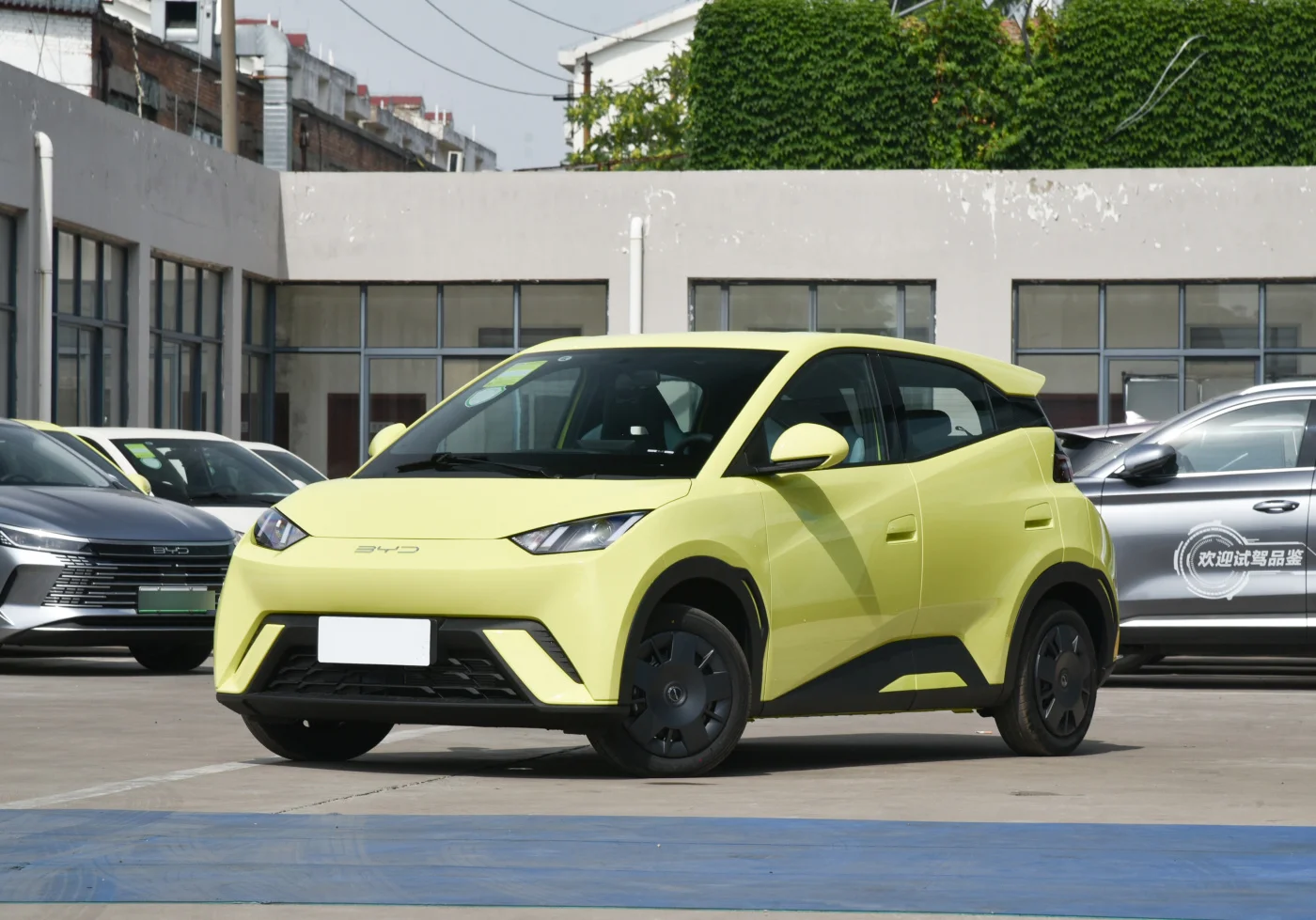
| Seagull (Dolphin Mini) | BYD | 30.1 / 38.9 kWh LFP | 305 / 405 km | ~240 / ~320 km | $9,000–$13,000 | Limited | Strong (BYD network) |
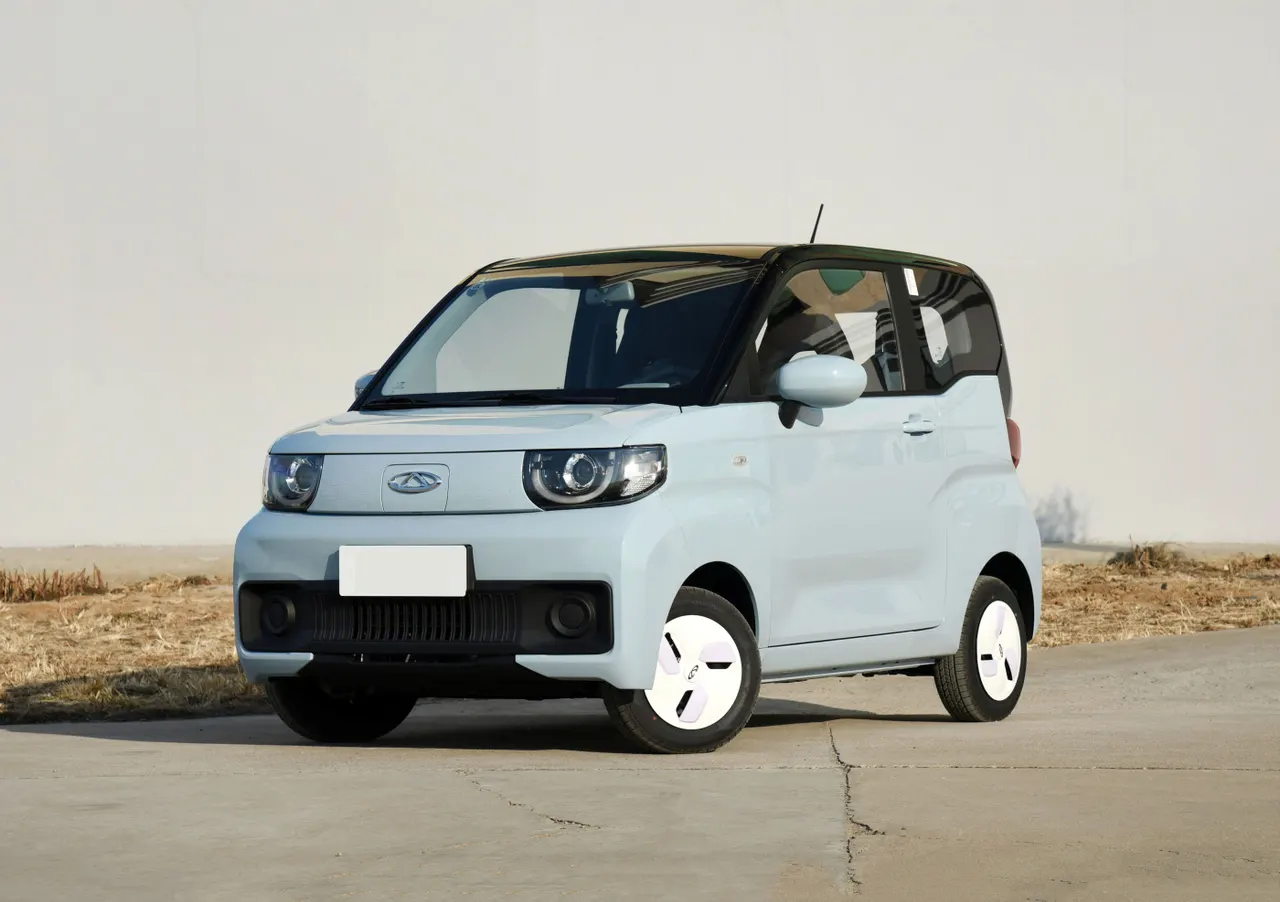
| Cloud EV | Wuling (SAIC-GM) | 17.3–26.7 kWh LFP | 200–333 km | ~160–260 km | $8,000–$12,000 | No | Limited overseas |
| T03 | Leapmotor | 37.3 kWh NMC | 403 km | ~320 km | $12,000–$16,000 | No | Growing (EU active) |
| Omoda E5 | Chery | 61 kWh NMC | 430 km | ~345 km | $16,000–$22,000 | Yes | Active (multi-market) |
| NETA V | Hozon Auto | 40.1 kWh LFP | 401 km | ~320 km | $10,000–$15,000 | Limited | Active (SE Asia) |
| ORA Good Cat | Great Wall Motor | 47.8 / 63 kWh | 430 / 501 km | ~345 / ~400 km | $16,000–$24,000 | Yes (some) | Active (GWM network) |
WLTP equivalent figures are estimates based on the standard 15–20% CLTC-to-WLTP conversion. Independently verified WLTP data should be obtained from the manufacturer for any model being marketed in European or other WLTP-standard markets.
Landed cost by market: what "cheap" actually costs
Using a BYD Seagull at $11,000 FOB as the reference for entry-tier landed cost across three representative markets.
| Cost item | UAE | Morocco | EU (BYD, Germany) |
|---|---|---|---|
| FOB price | $11,000 | $11,000 | $11,000 |
| Ocean freight | $900 | $1,000 | $1,100 |
| Marine insurance | $119 | $120 | $121 |
| CIF total | $12,019 | $12,120 | $12,221 |
| Import duty | $601 (5%) | $303 (2.5%) | $3,349 (27.4%) |
| VAT / local tax | $631 (5%) | $2,485 (20%) | $2,959 (19%) |
| Port + clearance | $550 | $600 | $650 |
| Total landed | ~$13,801 | ~$15,508 | ~$19,179 |
| Above FOB | +25.5% | +41.0% | +74.4% |
The UAE case is the strongest: land a $11,000 FOB vehicle at $13,800 and retail at $18,000–$20,000 for a 23–31% gross margin. The EU case is the weakest — a $19,200 landed cost competes directly with the BYD Dolphin (a step-up model with significantly better after-sales infrastructure), which lands at similar levels with much stronger dealer support economics. In the EU, the entry-tier argument collapses under the duty structure. Use the auto loan calculator to model financing across different retail price scenarios.
The after-sales risk at entry tier
The biggest risk with entry-tier Chinese EVs is not the vehicle hardware. The LFP battery in a BYD Seagull is the same chemistry as in BYD's flagships — it is not a cost-cut on the battery. The risk is what happens after the sale when something needs attention.
The entry-tier Chinese EV brands with the weakest overseas after-sales infrastructure are not necessarily building the worst cars. They are building cars for domestic China markets where service is dense and cheap. Exporting those cars without a service commitment is the distributor's problem, not the factory's. A $10,000 FOB Wuling with no service network is a $10,000 liability in a market where the nearest repair facility is 400 km away. A $22,000 FOB BYD Dolphin with 18 months of established service infrastructure in your market is the cheaper vehicle over a 4-year ownership cycle. This calculation is not obvious on a spreadsheet — it becomes obvious after the first warranty claim.
Before ordering any entry-tier model, ask three questions about after-sales support:
- Parts lead time: How long does it take to receive a replacement high-voltage contactor, inverter board, or motor controller from China? If the answer is "6–8 weeks," a vehicle breakdown puts a customer out for two months. That is a reputational cost that exceeds any margin you made on the sale.
- Software and diagnostics: Can a local technician access the vehicle's diagnostic system with a standard OBD tool, or does it require a proprietary brand tool available only from China? Entry-tier brands are less likely to have localised diagnostic tooling.
- Warranty claim process: Is there a regional warranty administrator, or do all claims go back to China for approval? A regional process adds days to a claim. A China-only process adds weeks — and often creates disputes over cost reimbursement that the importer absorbs.
Best markets for cheap Chinese electric cars
UAE and Gulf (5% duty)
Best landed cost for entry-tier models globally. Urban fleet buyers, ride-hailing operators, and entry-level retail buyers in Dubai and Abu Dhabi create genuine demand for sub-$20,000 retail EVs. BYD Seagull and NETA V have been sold through established Gulf distributors. Confirm local approval (ESMA) for each specific model before ordering.
Morocco (2.5% EV duty)
Morocco's preferential EV tariff makes it one of the most cost-effective African entry points for Chinese EVs. Growing urban middle class in Casablanca and Rabat, improving charging infrastructure, and a government target to electrify a significant portion of the vehicle fleet by 2030. Entry-tier models that clear local homologation land at competitive retail prices relative to local income levels.
Thailand (0% for qualifying EVs)
Thailand's 2023 EV incentive scheme offered 0% import duty on qualifying CBU EVs, which significantly boosted Chinese EV imports. The scheme has evolved — confirm current duty rate and qualifying model list before ordering. Wuling and BYD entry models have sold in volume here. The Thai market is also a regional hub for onward distribution to neighbouring markets.
New Zealand (0% duty)
New Zealand's FTA with China removes automotive tariff entirely. Small-market volume but excellent economics for entry-tier models. RHD requirement limits which entry models are eligible — confirm RHD availability for each specific model. BYD has established dealer network in New Zealand covering entry models.
Kenya and East Africa
Growing demand for affordable EVs among ride-hailing operators and commercial fleet buyers. Import duty varies (confirm current rate for Kenya under the EAC common external tariff). NETA V and BYD entry models have been sold here through import agents. After-sales infrastructure is the primary risk — prioritise brands with established regional distributors over trading company imports for this market.
Entry tier vs mid-range: the real trade-off
| Factor | Entry tier ($8K–$16K FOB) | Mid-range ($22K–$38K FOB) |
|---|---|---|
| Retail price (UAE) | $16,000–$22,000 | $34,000–$50,000 |
| Dealer gross margin | 18–28% (low-tariff markets) | 20–26% (most markets) |
| NCAP safety rating | Often untested / limited | 4–5 stars (top brands) |
| After-sales infrastructure | Limited — brand-dependent | Established (BYD, MG, Chery Omoda) |
| Parts availability overseas | Long lead times (6–12 weeks) | Shorter lead times (2–6 weeks) |
| RHD availability | Limited models | Wider selection |
| Buyer audience | Price-sensitive, urban, fleet | Broader — dealer, fleet, government |
The margin percentage is similar — but the absolute margin per unit at mid-range is 2–3x higher. A 25% margin on a $48,000 retail vehicle is $12,000 gross per unit. A 25% margin on an $18,000 vehicle is $4,500. If after-sales complexity is similar, the mid-range unit does more per sale. For most established dealers, entry-tier Chinese EVs make sense as an additional volume segment — not as the primary inventory strategy.
How to evaluate an entry-tier Chinese EV for your market
-
1
Calculate landed cost first, before any other evaluation. Use your market's duty rate, freight cost, and clearance fees to get the true landed number. If it does not work financially at a retail price your market will pay, the rest of the evaluation is irrelevant. See our full price and import duty guide for a market-by-market duty table.
-
2
Confirm homologation for your specific market. Entry-tier models are less likely to hold broad international type approval. Ask for the specific certificate for your destination — not a general statement about export capability. Individual vehicle approval (IVA) is available in some markets but adds $500–$3,000 per unit and slows your first import significantly.
-
3
Verify RHD production if your market requires it. Not all entry-tier models have RHD production. If your market is RHD, your shortlist immediately narrows. BYD Seagull and ORA Good Cat have RHD versions — Wuling Cloud EV does not. Confirm the production status directly with the factory export team, not a trading company that may not know the current schedule.
-
4
Test the after-sales chain before ordering. Contact the brand's regional technical support (or the nearest distributor) and ask how they handle a warranty claim. Ask for a parts price list. Ask for the contact of another importer in the region who is already selling this model. If none of these answers are easy to get, the after-sales chain is not ready for your market.
-
5
Start small, validate, then scale. Order 5–10 units for a first import. Run them in your fleet or with pilot customers for 90 days. Monitor reliability, charging compatibility, and buyer reception. Use the data to validate or disqualify the model before committing to a volume order. Contact us to discuss small-volume pilot sourcing for entry-tier models in your market.
Find the right budget Chinese EV for your market
Tell us your destination, target retail price, and quantity. We will confirm which entry-tier models have active export programs, homologation, and after-sales support in your market — and give you a full landed cost breakdown.
Common questions
What is the cheapest Chinese electric car available for export?
The BYD Seagull and Wuling Cloud EV are among the cheapest, with FOB prices in the $8,000–$13,000 range for B2B orders. However, export configuration, homologation, and after-sales support for these entry models are significantly more limited than mid-range models. Confirm export eligibility, homologation status, and spare parts availability for your destination before ordering.
How much do cheap Chinese electric cars cost after import duties?
A $10,000 FOB Chinese EV lands at approximately $12,500 in the UAE (5% duty, 5% VAT), $14,500–$16,000 in Morocco (2.5% EV duty plus taxes), and $18,000–$22,000 in the EU (27–45% total duty plus VAT). The low-tariff markets are where entry-tier Chinese EVs make the strongest economic case for dealers.
Are cheap Chinese electric cars reliable enough for export markets?
The LFP battery in entry-tier BYD models is the same chemistry as their flagships — not a hardware compromise. The reliability risk is after-sales: parts lead times and service network access. Confirm both for your specific market before ordering. A cheap vehicle with poor local service support costs more over 3 years than a more expensive vehicle with strong local support.
Which markets have the best economics for cheap Chinese electric cars?
UAE (5% duty), Morocco (2.5% for EVs), New Zealand (0% duty), Thailand (0% for qualifying EVs), and select East African markets offer the best economics. In these markets, a $10,000 FOB Chinese EV can retail at $16,000–$20,000 with a workable dealer margin. EU anti-subsidy duties significantly compress the economics for entry-tier models.
What is the minimum order quantity for cheap Chinese electric cars?
Factory-direct B2B orders start at 10–20 units for established brands and 5–10 units for smaller brands through authorised exporters. Single-unit orders are available through trading companies at a 10–20% premium. For first orders in a new market, 5–10 units through an authorised exporter is the lowest-risk approach before committing to factory-direct volumes.
Do cheap Chinese electric cars have safety certification for export?
This varies by model. BYD Seagull has not been independently tested by Euro NCAP as of mid-2026. Leapmotor T03 has been tested in Europe. For markets requiring NCAP safety certification, mid-range Chinese EVs (BYD Dolphin, MG4) are safer choices. Confirm local safety certification requirements for your destination — not all markets require international NCAP results.
Are cheap Chinese electric cars available in right-hand drive?
Limited. RHD production at the entry tier is less common than mid-range. BYD Seagull is available in RHD for some markets. Wuling Cloud EV is predominantly LHD. ORA Good Cat and Chery Omoda E5 have RHD variants. If RHD is required, confirm factory production availability before shortlisting any entry-tier model.
What is the range of the cheapest Chinese electric cars?
Entry-tier Chinese EVs offer 200–405 km CLTC range — approximately 160–320 km in real-world urban use. The BYD Seagull long-range achieves ~305 km CLTC (~245 km WLTP equivalent). These ranges suit urban daily use under 100 km. For buyers with longer daily routes or intercity requirements, mid-range or PHEV models are the better recommendation. See our Chinese hybrid cars guide for PHEV options.