
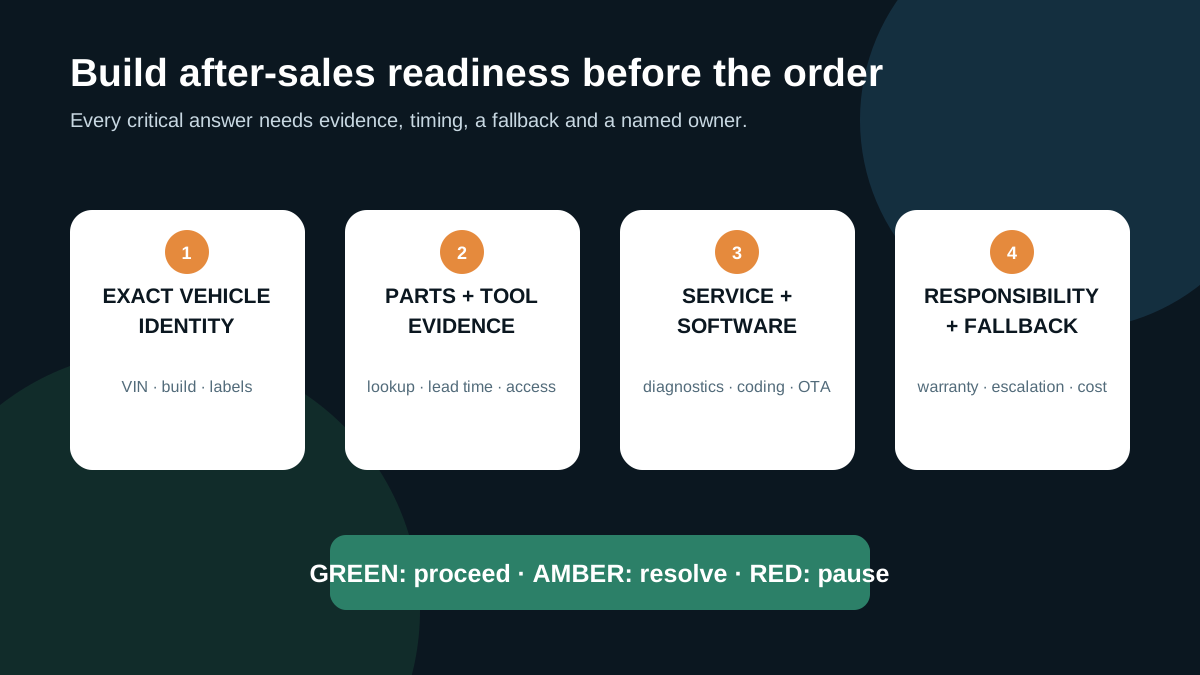
The right time to test after-sales support is before you order the vehicle. Build a VIN- and configuration-specific evidence pack covering parts, diagnostics, software accounts, warranty geography, service documents, expected timing and a named escalation owner. If a critical answer exists only as a sales promise, treat it as unresolved—not as support you can rely on after arrival.
This is not a test of whether a brand is good or bad. It tests whether the exact vehicle, seller, destination and service path form a workable system.
Start with the exact vehicle, not the model name
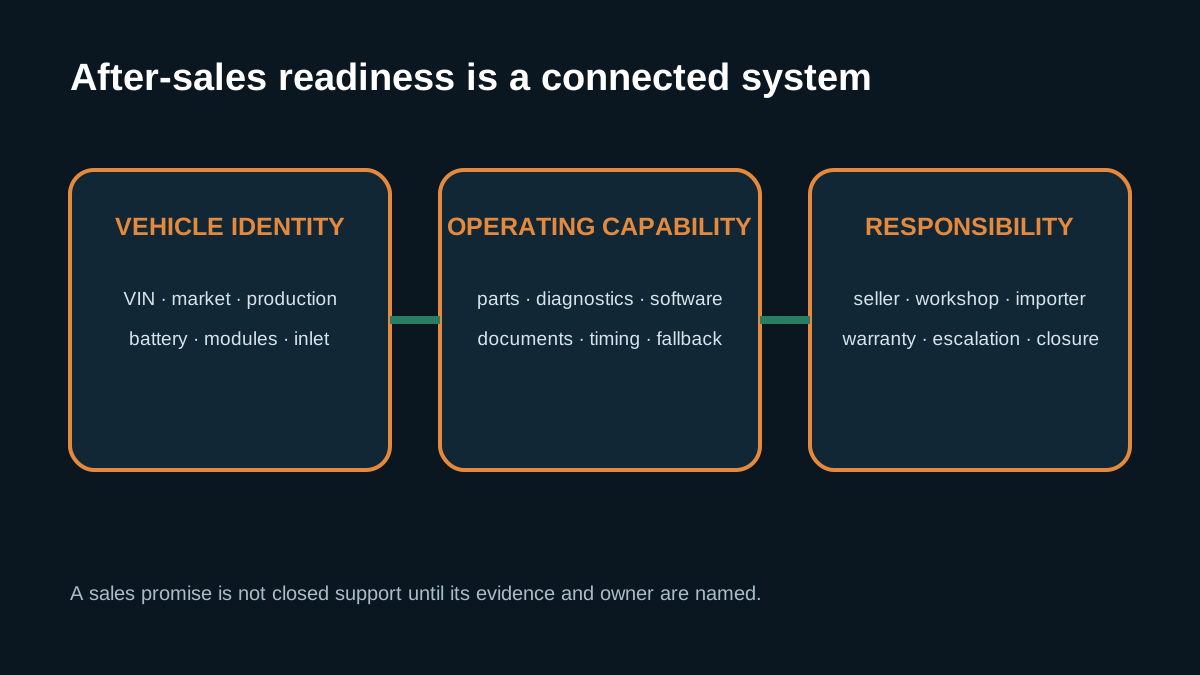
Two cars with the same public model name can differ by model year, market, battery pack, charging inlet, control modules, software branch and part revisions. Record the complete VIN, production date, destination-market configuration and identifying labels for the battery, drive unit, charging hardware and major controllers.
For a US-bound vehicle, NHTSA’s vPIC service can be one identity checkpoint because it exposes manufacturer-submitted VIN information. It cannot confirm that a replacement part fits, that a dealer can program it or that a warranty applies. Keep supplier photographs and documents beside any decoded record and resolve mismatches before ordering.
Build a service-critical parts map
Do not ask only whether the seller can provide spare parts. Give the seller a short, service-critical list and ask for evidence against the exact vehicle identity. Include collision and exterior parts that could immobilize repair; charging and low-voltage components; cooling pumps, valves and sensors; suspension, steering and brake items; high-voltage fuses and service disconnects; model-specific body electronics; and ordinary consumables.
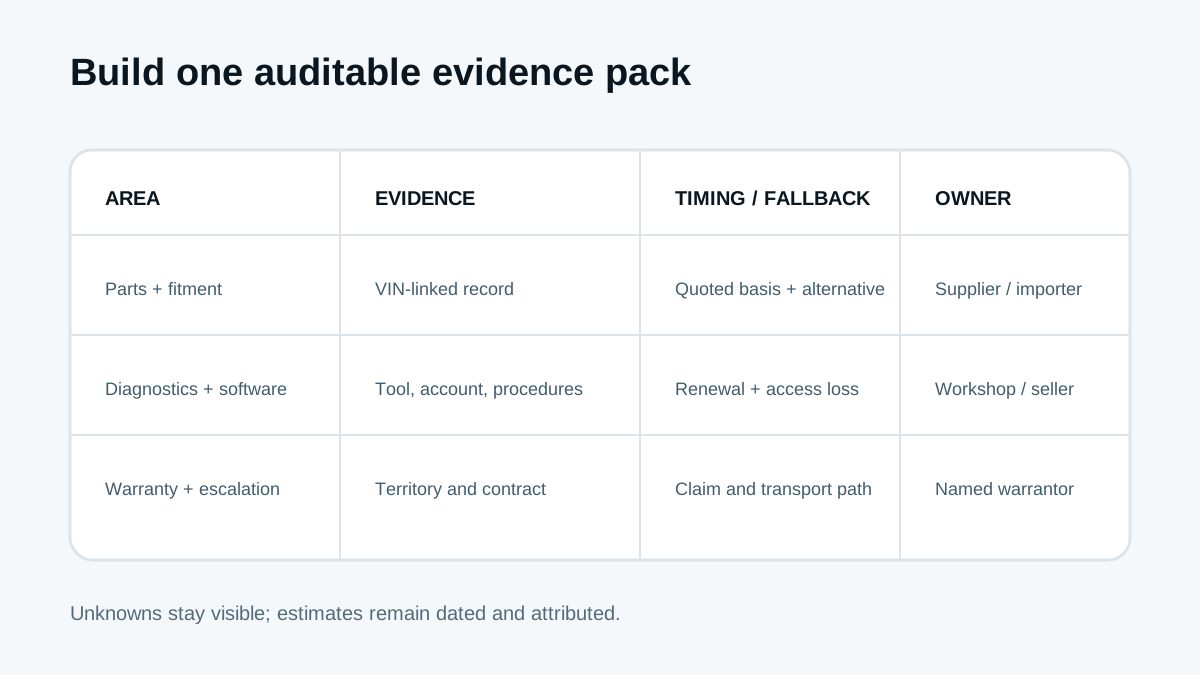
For each line, request the part number or supersession logic, source, fitment evidence and quoted delivery basis. A generic catalogue screenshot is weaker than a VIN-linked parts record. A lead-time estimate should identify who supplied it, what stock or production assumption it uses, the destination and the date quoted. Do not turn an estimate into a permanent promise.
If the answer is “we can identify it after arrival,” mark the row amber. If the item could keep the vehicle off the road and there is no credible fallback, mark it red.
Verify diagnostic access as an operating chain
A scan tool that reads generic fault codes is not the same as a complete repair path. Ask the seller to show how a workshop would identify the exact modules, read manufacturer-level faults and live data, access service procedures and wiring, perform required calibration or coding, obtain software legitimately, and escalate a case that the first contact cannot resolve.
Record the tool, account or subscription owner, regional eligibility, language, renewal conditions and who will perform the work. If access depends on a seller-controlled account, clarify what happens if that relationship ends. If remote work is proposed, ask what can and cannot be done, what connectivity is required and who accepts responsibility for interruption.
The exact owner and service documentation matters. The BYD SEAL U EV owner’s manual is tied to a defined configuration and market. Demand the manual for your exact vehicle rather than treating another model’s document as proof.
Separate software, app and repair access
Check four different layers: owner app and account registration; maps, connected services and cellular availability; vehicle software updates and regional prerequisites; and workshop software, coding and calibration after component replacement.
One layer can work while another does not. A successful app login does not prove workshop access. An over-the-air update does not prove that a replacement controller can be commissioned. Verify the owner-account branch separately, then keep the repair branch in this after-sales plan.
Read warranty as a geographic contract
Ask for the warranty document that applies to the exact seller, vehicle and destination—not a brochure headline. Record the warrantor, covered territory, term, exclusions, required records, claim process, approved repair route, parts and labour handling, transport responsibility and escalation path.
The BYD Europe limited warranty manual defines a particular region and terms. It does not prove coverage for a private import elsewhere. If the seller offers a separate warranty, identify that entity and read that contract on its own terms.
For a US vehicle, a NHTSA VIN recall lookup is an additional check, but its result is bounded by market and manufacturer reporting. It does not replace checking campaigns and support information with the seller and original-market manufacturer.
Assign responsibility before something fails
Write down names and roles, not just company logos. Identify who confirms part fit; who orders and exports it; who handles local import inputs; who diagnoses the fault; who supplies documents or software access; who authorizes warranty work; and who owns escalation.
An importer, marketplace, exporter, workshop and manufacturer may own different parts of the chain. If two parties both say the other is responsible, the gap belongs to the buyer until it is resolved in writing.
Use a red–amber–green order gate
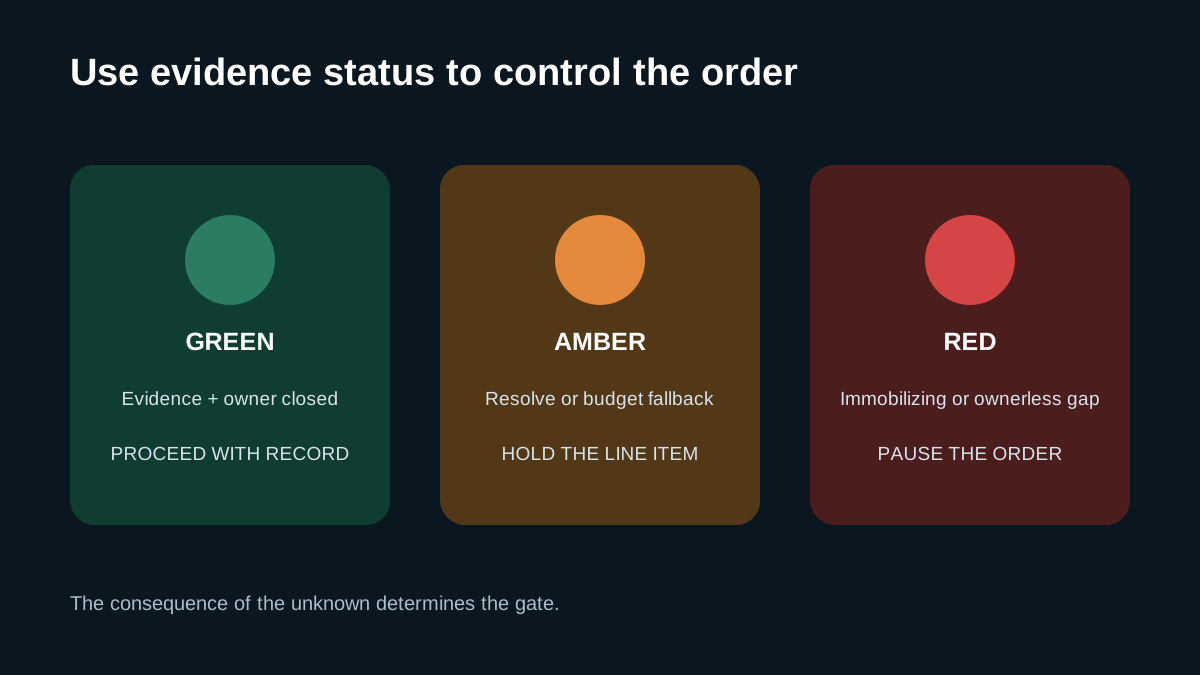
| Status | Evidence state | Next action |
|---|---|---|
| Green | Identity recorded; critical parts, diagnostics, documents, software limits and warranty geography are evidenced; every escalation has an owner. | Carry assumptions into the order record. |
| Amber | An important item depends on an unverified account, generic parts claim, nonbinding timing, unclear workshop capability or incomplete warranty document. | Resolve it or budget a named fallback. |
| Red | Configuration is unclear, a critical part cannot be identified, repair depends on inaccessible software, warranty territory is unknown or no party owns escalation. | Pause the order. |
Send a better after-sales inquiry
Browse the vehicle catalogue to identify the exact configuration, then send one structured inquiry instead of asking for full after-sales support. Include the model, VIN if available, production date, destination, intended use, expected annual distance, local workshop capability and critical parts list. Ask the respondent to attach evidence and label estimates.
- VIN, production date and exact market configuration.
- Battery, drive unit, charging hardware and controller labels.
- Critical parts list with fitment and timing evidence.
- Diagnostic, service-document, software and account ownership.
- Warranty entity, territory, claim path and escalation owner.
Frequently asked questions
Should I request a complete spare-parts catalogue before ordering?
Request VIN- or configuration-linked lookup evidence plus a prioritized service-critical list. A generic catalogue can still miss supersessions, market variants and programming requirements.
Is the VIN enough to guarantee the correct part?
No. Selection may also require production date, market code, component label, software version, photographs and supersession information. Ask what evidence was used.
Can an independent workshop service an imported Chinese EV?
Possibly, but capability is task-specific. Verify high-voltage procedures, service information, diagnostic depth, coding and calibration access, tooling and parts supply with the actual workshop.
Does a working owner app prove diagnostics and software support?
No. Owner apps, connected services, vehicle updates and workshop programming are separate layers. Test and document each one.
Will the original manufacturer’s warranty follow a privately imported vehicle?
Do not assume it will. Read the document for the exact market, seller and destination, and identify who receives and pays a claim. A seller warranty may differ from a manufacturer warranty.
What if one after-sales answer is still unknown?
Classify the consequence. If it affects convenience, record uncertainty and a fallback. If it could immobilize the vehicle, prevent proper repair or leave major responsibility ownerless, pause the order.
Sources and limitations
- NHTSA vPIC API
- NHTSA recalls
- BYD SEAL U EV owner and limited-warranty manuals linked above
This guide uses official identity, recall, owner-manual and warranty sources to define questions, not to certify a vehicle. Parts availability, diagnostic access, software eligibility, timing and warranty depend on the exact VIN, configuration, seller, destination and current documents.
Turn the checklist into a transaction record
Send the exact configuration, destination, workshop capability and service-critical parts list with your vehicle inquiry.