
Choose RoRo when the exact EV is accepted as rolling cargo at both ports and the vehicle can be driven, handed over and collected under the carrier’s rules. Choose a container when the route, condition, accessories or custody plan requires a cargo transport unit and the shipper can control declaration, blocking, bracing, battery condition and unloading. Neither method is automatically cheaper, faster or safer: request written acceptance for the exact VIN, battery condition, route and loading scope before booking.
Choose from the exact vehicle and route—not the label
Start with VIN, model year, propulsion type, battery type, new or used status, operability, visible damage, recent repair, dimensions, mass, ground clearance, keys, state of charge and loose accessories. Then record origin and destination ports, inland legs, transshipment, terminal rules and who controls each handover.
A booking comparison is invalid if one quote assumes a running vehicle delivered to a RoRo terminal while another includes container pickup, loading, lashing and destination unpacking. Put both options into the same door-to-release scope.
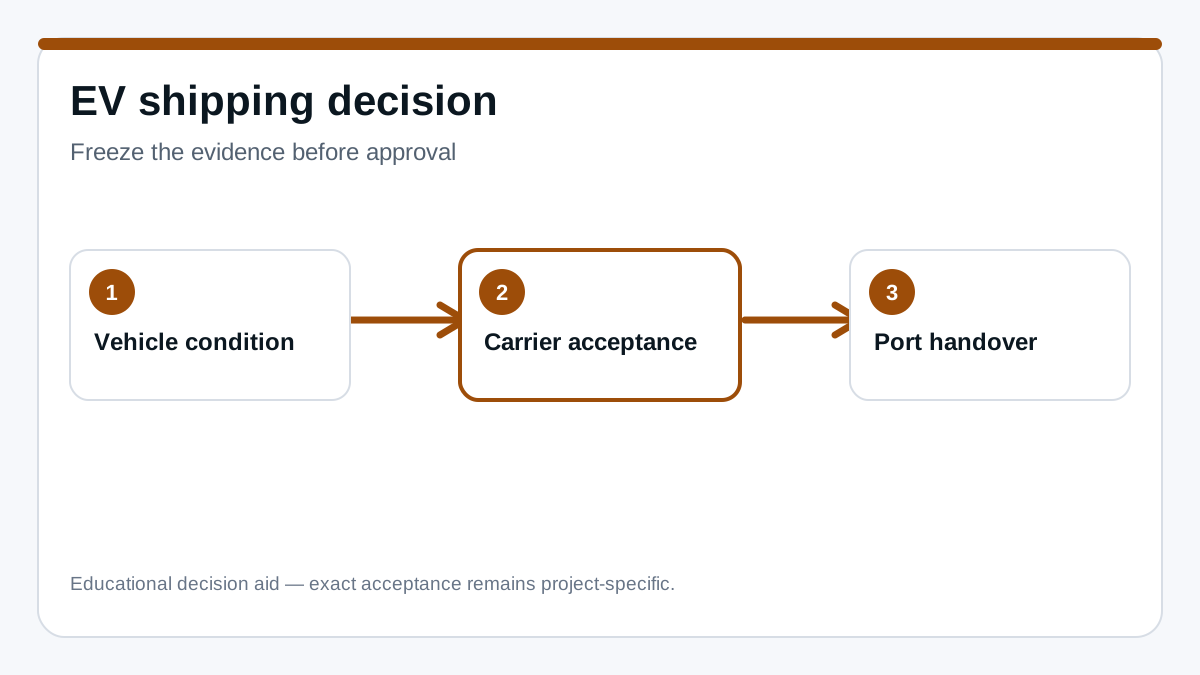
Get written carrier acceptance before paying the booking
Battery-powered vehicles are handled under carrier and dangerous-goods rules that depend on stowage, route and condition. Maersk’s vehicle-booking guidance distinguishes vehicle stowage spaces from vehicles packed in a cargo transport unit, and requires customers to comply with applicable IMDG requirements. CMA CGM’s EV/HEV booking guidance asks for declared vehicle and battery information and adds requirements for some used vehicles.
Send the carrier or forwarder a written declaration and ask it to identify the applicable classification, documents, condition limits, SOC instruction if any, prohibited damage or repair states, inspection evidence and booking validity period. Do not copy a threshold from another carrier or voyage.
Document the vehicle before terminal handover
Link every photo and record to the VIN. Capture all sides, roof, underbody where accessible, wheels, glass, charge port, instrument warnings, odometer, keys and loose items. Record whether the vehicle starts, selects gear, steers and brakes. Preserve diagnostic or battery-condition evidence only within the method used; it does not replace physical inspection.
The Chinese EV pre-shipment inspection checklist provides the wider unit-level release workflow. Shipping acceptance is one gate inside that release, not a substitute for it.
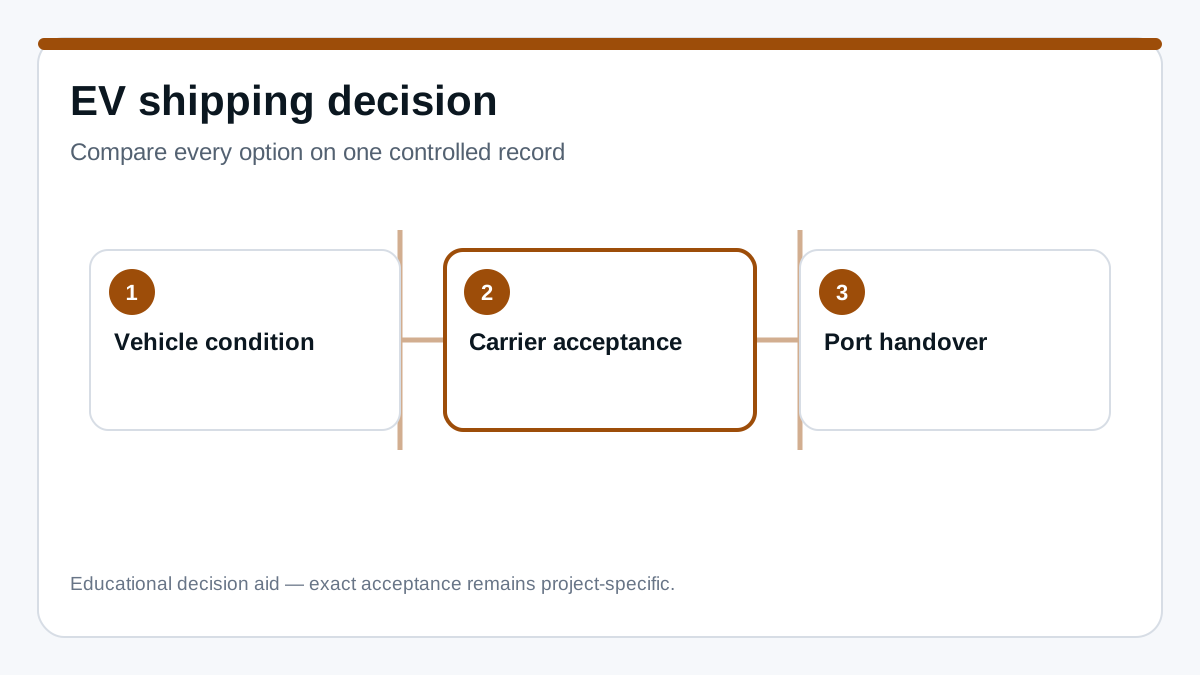
Compare the complete operating chain
| Decision area | RoRo | Container | Confirm in writing |
|---|---|---|---|
| Terminal movement | Vehicle normally moves under terminal process | Container moves as a cargo unit | Operability and handover rules |
| Custody | Keys and vehicle pass through vehicle terminals | Seal and loading record define the unit | Damage-survey and exception points |
| Loose goods | Often restricted | Only when declared, secured and accepted | Carrier and customs permissions |
| Loading control | Terminal/carrier process | Shipper controls blocking, bracing and declaration | Competent loading owner |
| Destination | Vehicle collection and release | Container release, unpacking and return | Equipment, labor and storage exposure |
| Cost basis | Freight plus terminal/inland/handling | Freight plus container, loading, lashing, unpacking and return | Same Incoterm and exclusions |
Compare sailing and cutoff reliability, port pair, transshipment, terminal storage, customs examination, inland transport, insurance basis and exception handling. A lower ocean-freight line can produce a higher landed result when accessorial charges and recovery work are omitted.
Treat container loading as an engineered handover
The shipper is responsible for selecting a suitable cargo transport unit and for a compliant loading plan. Confirm internal dimensions, door opening, floor capacity, vehicle clearance, approved securing points, blocking and bracing method, wheel restraint, key handling, state-of-charge rule, isolation instruction, alarm status and whether any accessory is permitted inside.
Do not attach restraints to suspension, battery enclosure or body points without approved information. Photograph the empty container, vehicle position, every restraint, labels and seal. Record names, time and container number. The final plan must follow the carrier, vehicle manufacturer, competent loader and applicable transport rules.
Plan destination release and recovery before departure
Ask who can receive the vehicle, obtain customs release, pay terminal charges, move or unpack it and recover it if it will not start. For a container, identify crane or dock access, ramp or unloading method, competent labor, safe isolation response and empty-container return. For RoRo, confirm key release, battery-support policy and towing restrictions.
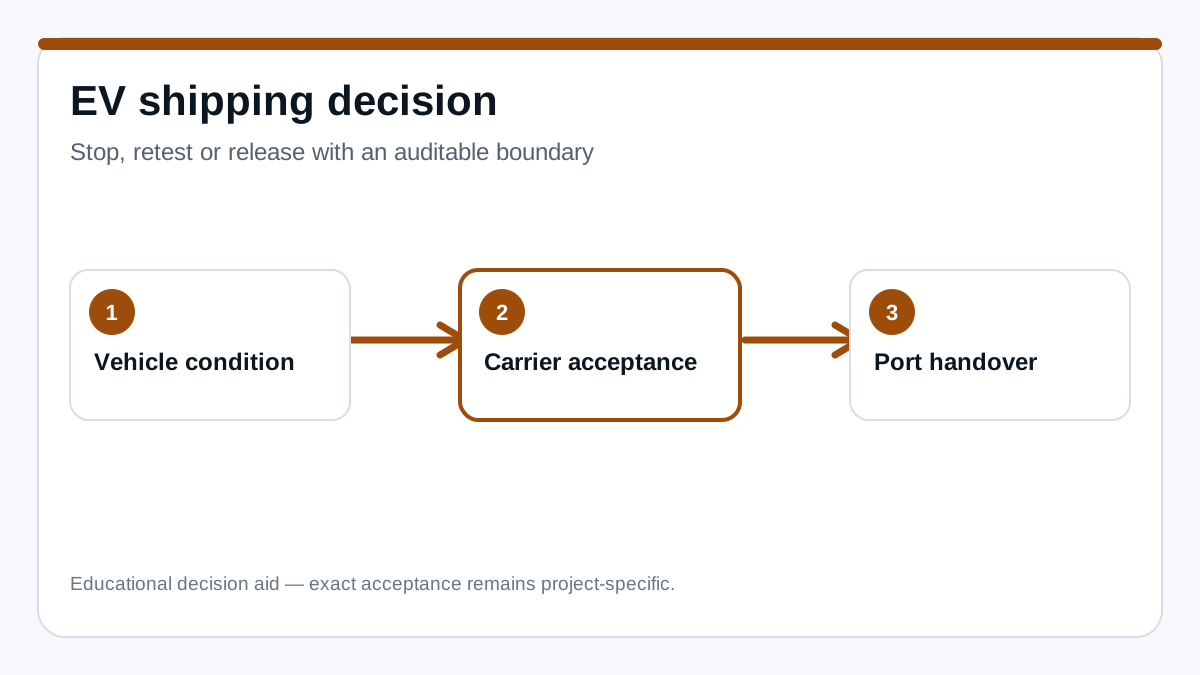
Use the current vehicle catalogue to identify the exact model, then request a VIN-specific offer. A model page alone does not confirm shipping acceptance.
Send one decision-ready booking brief
- VIN, model, year, propulsion and battery type.
- New/used status, operability, condition, warnings and repair history.
- Dimensions, mass, clearance, keys and declared loose items.
- Origin/destination ports, inland legs, Incoterm and responsible parties.
- Requested RoRo and container scopes with all inclusions and exclusions.
- Carrier classification, documents, SOC/condition rules and expiry.
- Origin loading/handover and destination release/recovery plan.
- Survey, photos, seal/lashing evidence and exception process.
Need a vehicle-and-shipping evidence pack?
Send the model, destination, intended quantity and route. We will identify the vehicle information needed for a carrier-ready inquiry.
Review models and inquireFAQs
Is RoRo always cheaper than a container for one EV?
No. Compare the same route and scope, including origin/destination terminals, inland transport, handling, inspections, storage, loading or unpacking and exception risk.
Can a non-running Chinese EV ship by RoRo?
Only when the specific carrier and terminals accept that condition and the handling plan is approved. Many vehicle operations assume the unit can be driven or safely moved.
Can spare parts be placed inside the EV?
Do not assume so. Loose goods may be restricted and must be declared, accepted and secured under the carrier, customs and transport rules.
What state of charge should the EV have?
Use the current written instruction for the exact carrier, route and vehicle. There is no universal SOC value that should be copied across bookings.
Does container shipping remove dangerous-goods obligations?
No. Packing a vehicle in a container changes the stowage and loading context; it does not remove declaration, classification or carrier requirements.
Sources and limitations
- Maersk — Requirements for Booking Vehicles
- CMA CGM — EV/HEV vehicle booking guidelines
- EMSA — Alternative-fuel vehicle carriage technical and regulatory review
Carrier rules, port acceptance, charges and regulations change. This guide defines the evidence to request; the current carrier and competent parties control the booking.