Why Chinese electric car prices are structurally lower
The price gap between a Chinese electric car and a comparable Western or Korean model is not a promotional strategy or a quality trade-off. It is the result of three compounding structural advantages that have built up over a decade.
Vertical integration. Chinese EV manufacturers — particularly BYD — produce their own battery cells, motors, power electronics, and semiconductors. Every link in the supply chain that an independent supplier would mark up is captured internally. BYD's Blade Battery, manufactured in-house using LFP chemistry, costs approximately 30–40% less per kWh than equivalent NMC cells sourced externally by European manufacturers.
Production scale. China produced 12.9 million electric vehicles in 2025 — more than the rest of the world combined. Fixed development and tooling costs are spread across vastly larger volumes. A BYD production line runs at a cadence that makes a European or American rival's equivalent operation look like a prototype program.
Compressed development cycles. A new EV platform in Europe takes 5–7 years from concept to production. Chinese manufacturers have cut this to 18–24 months. The capital tied up in development is lower, the time-to-market risk is lower, and the iteration speed means software and feature gaps close faster than competitors expect.
Chinese electric car prices by segment in 2026
The table below covers FOB prices for B2B export orders. Single-unit export prices are 8–15% higher. Confirm all pricing directly with the manufacturer's export team — factory pricing updates quarterly.
| Segment | Example models | Battery | WLTP range | FOB (B2B 10+ units) |
|---|---|---|---|---|
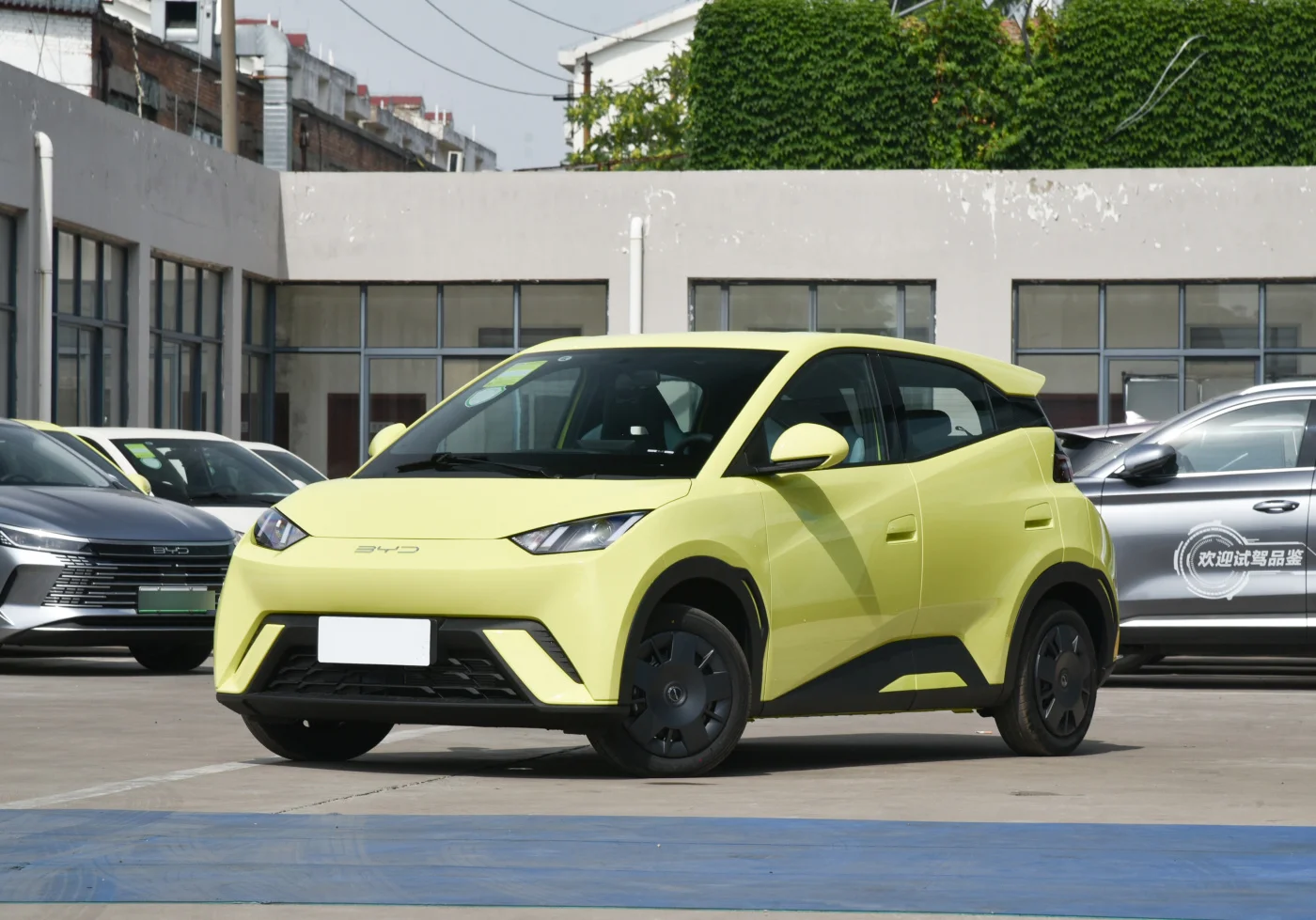
| Entry compact | BYD Seagull, Wuling Cloud EV, Chery QQ Ice Cream | 30–38 kWh LFP | 280–350 km | $8,000–$16,000 |
| Compact hatchback / sedan | BYD Dolphin, MG4 EV, Chery Omoda E5 | 45–60 kWh LFP/NMC | 350–450 km | $18,000–$28,000 |
| Compact SUV | Jaecoo E5, BYD Atto 3, Geely EX5 | 55–75 kWh LFP/NMC | 380–470 km | $22,000–$32,000 |
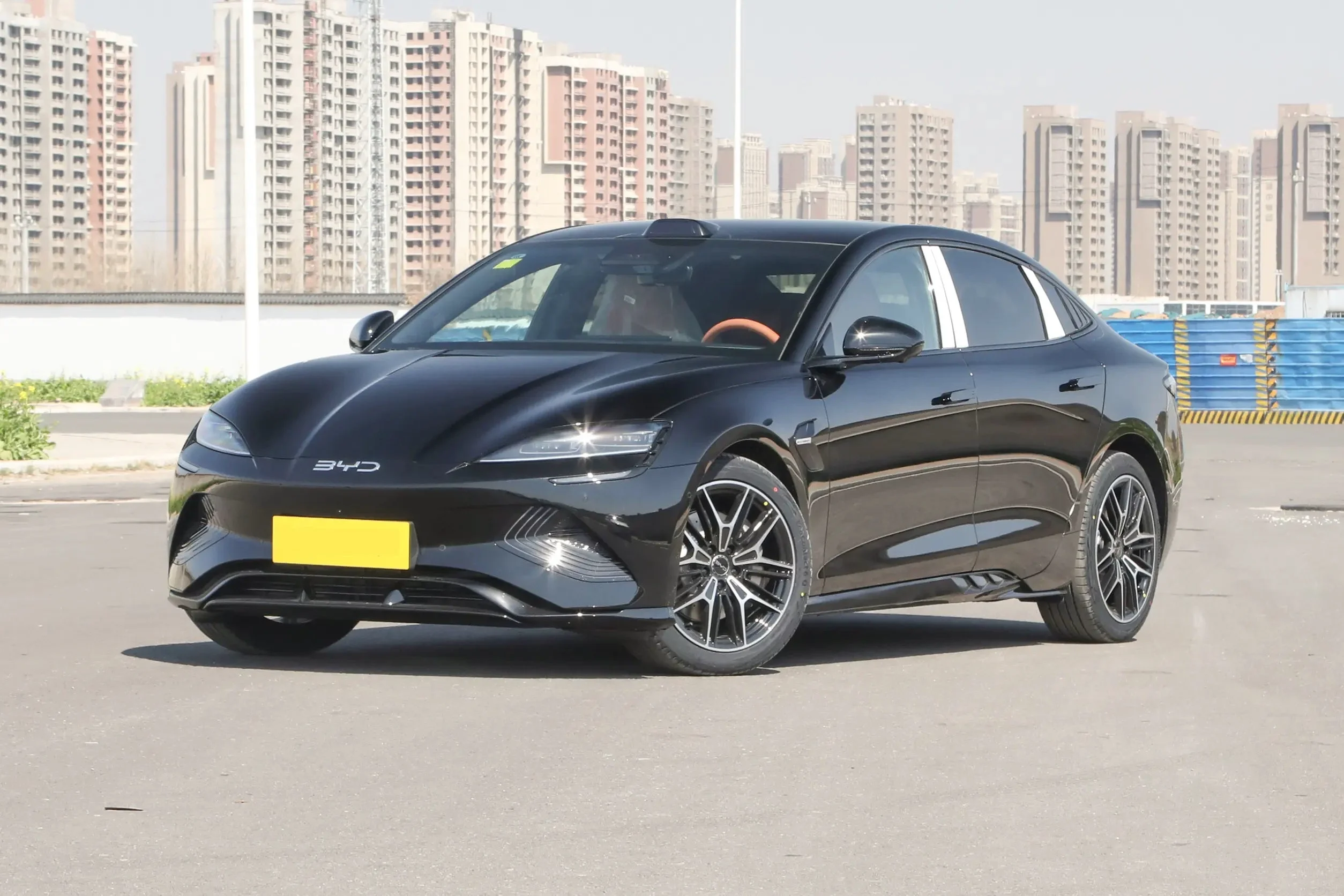
| Mid-size sedan | BYD Seal, BYD Han, XPeng P7 | 65–87 kWh NMC | 480–570 km | $26,000–$38,000 |
| Mid-size SUV | BYD Sealion 7, MG S5 EV, XPeng G6 | 72–88 kWh LFP/NMC | 430–550 km | $30,000–$42,000 |
| Large SUV / MPV | BYD Tang EV, SAIC Maxus MIFA 9, Li Auto L9 | 90–110 kWh | 400–560 km | $45,000–$65,000 |
| Premium flagship | NIO ET9, Zeekr 9X, BYD Yangwang U8 | 100–150 kWh NMC | 500–700 km | $65,000–$85,000+ |
Export eligibility varies by model. Not every model in the table above is available for all destinations — some are domestic China-only builds. Confirm export availability, RHD production status, and homologation before shortlisting any model for a specific market.
FOB price explained: what it includes and what it doesn't

FOB is the starting point, not the total cost. Every market adds freight, duty, VAT, and compliance costs on top.
FOB — Free On Board — means the price covers the vehicle and all costs up to and including loading onto the vessel at the Chinese port of origin. Once the goods are on board, all subsequent costs are the buyer's responsibility.
FOB includes:
- Vehicle manufacture and factory gate price
- Inland transport from factory to port of origin
- Export customs clearance in China
- Port handling at origin
- Loading onto the vessel
FOB does not include:
- Ocean freight (RoRo or container)
- Marine insurance
- Import customs duty in the destination country
- Import VAT or GST
- Port handling and customs clearance at destination
- Inland transport from arrival port to your location
- Homologation or compliance modification costs
- Pre-delivery inspection (PDI)
Some suppliers quote CIF (Cost, Insurance, Freight) — which adds ocean freight and insurance to the FOB price. CIF is convenient but verify the shipping rate independently. Inflated CIF freight figures are a common margin tool used by trading companies.
Import duties on Chinese electric cars by market
Duty is the biggest variable in landed cost — and the most market-dependent. The table below covers the primary import destinations for Chinese EVs as of May 2026. Rates are subject to change: verify with a local customs broker before calculating any order.
| Market | Base duty | Anti-subsidy / additional | Effective total | VAT / GST | Notes |
|---|---|---|---|---|---|
| UAE | 5% | None | 5% | 5% | One of the lowest-cost import destinations. Free zone options available. |
| Saudi Arabia | 5% | None | 5% | 15% | GCC common external tariff. VAT at 15% significantly impacts landed cost. |
| Australia | 5% | None (2026) | 5% | 10% GST | No anti-subsidy duty as of mid-2026. Confirm if reviewing occurs. |
| New Zealand | 0% | None | 0% | 15% GST | FTA with China removes automotive tariff. Lowest duty market globally. |
| Southeast Asia (ASEAN) | 0–40% | Varies by country | 0–40% | 7–12% | Thailand: 0% on CBU EVs until 2025 scheme ends. Vietnam: 25–50%. Indonesia: 0% for qualifying EVs. Verify per country. |
| Africa (varies) | 0–30% | None (most markets) | 0–30% | 0–20% | South Africa: 25% duty. Kenya: 25%. Morocco: 2.5% for EVs. Nigeria: 35% (CBU). Check per-country HS code. |
| UK | 6.5% | ~19% (China-specific) | ~25.5% | 20% | Effective rate for most Chinese brands. UK Global Tariff rate is under periodic review. |
| EU — BYD | 10% | 17.4% | 27.4% | 19–25% | Anti-subsidy duty in force from Oct 2024. Rate by brand — see separate column. |
| EU — SAIC (MG) | 10% | 35.3% | 45.3% | 19–25% | Highest EU rate. Significantly impacts MG4 and MG S5 landed cost vs pre-2024. |
| EU — others | 10% | 21.3% | 31.3% | 19–25% | Applies to Chery, Geely, XPeng, NIO, and others not individually sampled in the investigation. |
| Canada | 6.1% | None (2026 trade agreement) | 6.1% | 5% GST + PST | Canada–China automotive agreement (Jan 2026) replaced the prior 100% tariff with standard duty. |
| USA | 27.5% | 179% | 206.5% | None (federal) | Effectively prohibitive. Chinese EVs are not commercially imported into the US market at scale. |
All rates shown are applied to CIF value (FOB + freight + insurance). VAT and GST are applied to CIF plus duty in most markets. For precision, work with a licensed customs broker in your destination country using the correct HS tariff code for your specific model.
Landed cost worked examples
Using a BYD Sealion 7 at $32,000 FOB as the reference vehicle across three representative markets.

Ocean freight is typically $900–$1,800 per unit for RoRo. Container shipping runs higher but protects higher-value models during transit.
| Cost item | UAE | Australia | EU (Germany, BYD) |
|---|---|---|---|
| FOB price | $32,000 | $32,000 | $32,000 |
| Ocean freight (RoRo) | $1,100 | $1,400 | $1,200 |
| Marine insurance (1%) | $331 | $334 | $332 |
| CIF | $33,431 | $33,734 | $33,532 |
| Import duty | $1,672 (5%) | $1,687 (5%) | $9,190 (27.4%) |
| VAT / GST | $1,755 (5%) | $3,542 (10%) | $8,112 (19%) |
| Port handling | $400 | $420 | $450 |
| Customs clearance | $350 | $420 | $500 |
| Total landed cost | ~$37,608 | ~$39,803 | ~$51,784 |
| Cost above FOB | +17.5% | +24.4% | +61.8% |
VAT is recoverable as input tax for VAT-registered businesses in most markets. The net cost to a VAT-registered importer is therefore the landed cost minus the recoverable VAT — which changes the EU example materially. Confirm VAT recoverability with your local tax advisor before building a pricing model.
What the price gap means for dealer margin
A BYD Sealion 7 at $37,600 landed in Dubai retails at $49,000–$52,000. Dealer gross margin: 23–27% per unit. A comparable Korean mid-size EV lands at $51,000–$54,000 in the same market. To achieve the same retail margin, MSRP needs to clear $65,000 — which moves it into a different competitive bracket entirely. The dealers making money in the UAE EV market in 2026 are not choosing between Chinese and Korean on ideological grounds. They are reading the margin table. Chinese EVs win that table by 8–10 percentage points in low-tariff markets.
In the EU the margin calculation is more compressed due to anti-subsidy duties. A BYD Sealion 7 landed in Germany at ~$51,800 retailing at €58,000 (~$63,800) yields approximately 19% gross margin — still competitive with Korean rivals that land at €54,000–$59,000 on paper before factoring in dealer incentive programs. The differentiation in the EU market is that Chinese brands need to fund after-sales infrastructure investment out of that margin, which Korean brands have already amortised.
How to get an accurate price for your target market
-
1
Start with your retail price target, not the FOB price. Work backwards from the retail price your market will support. Subtract your required gross margin, then subtract landed cost (freight + duty + VAT + compliance). The number left is your maximum FOB budget. Start shortlisting models from there.
-
2
Get three FOB quotes from different supply routes. Factory direct, authorised exporter, and licensed trading company will give you materially different prices — typically $1,500–$4,000 per unit apart on a $35,000 vehicle. Factory direct is lowest cost but requires higher MOQ (often 20+ units). Trading companies can supply single units but margin is built in. Know which you are getting.
-
3
Confirm the HS code and duty rate with a customs broker before ordering. The duty rate depends on the correct HS classification for your specific model in your specific destination. "EV" is not a single tariff code — battery configuration, body type, and GVW all affect classification in some markets. A $2,000 broker consultation before your first container saves far more than that in miscalculated duty.
-
4
Negotiate volume terms, not just unit price. For orders of 20+ units, negotiate payment terms (30/70 vs 50/50), production timeline, pre-delivery inspection access, and warranty terms in addition to price. Volume discount on a $35,000 vehicle is typically 5–8% for 20 units and 8–12% for 50+ units. Use the auto loan calculator to model financing across your fleet volume.
-
5
Include compliance cost in your landed cost calculation. For markets where the model is not fully type-approved, individual vehicle approval (IVA) or compliance modification costs can add $500–$5,000+ per unit. These are not optional — they are the cost of legal registration. Amortise them across your total import volume when building your pricing model. Request a quote with your destination country for a compliance cost estimate specific to your target model.
Get a landed cost estimate for your market
Tell us your destination, target model, and quantity. We will put together a current FOB price, duty rate, and full landed cost breakdown. Most buyers get a first response within one business day.
Common questions
How much do Chinese electric cars cost FOB?
FOB prices range from approximately $8,000 (entry compact) to $85,000+ (premium flagship). The largest B2B volume sits in the $22,000–$42,000 band covering compact and mid-size models from BYD, MG, Chery, and Geely. B2B pricing for 10+ unit orders is typically 5–8% below single-unit export price — confirm directly with the manufacturer's export team.
What import duty applies to Chinese electric cars in the EU?
The EU applies standard customs duty (10%) plus model-specific anti-subsidy duties from October 2024. BYD: 17.4% anti-subsidy (27.4% total). SAIC (MG): 35.3% anti-subsidy (45.3% total). Other manufacturers: 21.3% anti-subsidy (31.3% total). VAT is applied on top. Rates are under annual review — confirm current rates with a customs broker before calculating any order.
What is the landed cost of a Chinese electric car in the UAE?
A mid-range Chinese EV at $32,000 FOB lands in Dubai at approximately $37,600 all-in: FOB $32,000 + freight $1,100 + insurance $331 = CIF $33,431, plus 5% duty ($1,672), 5% VAT ($1,755), and port plus clearance ($750). Use this as a planning baseline — actual costs vary by model and agent.
Why are Chinese electric cars cheaper than Western rivals?
Three structural factors: (1) Vertical supply chain integration — BYD and others produce their own battery cells, motors, and electronics, removing supplier margins at every link. (2) Production scale — China produced 12.9 million EVs in 2025, amortising fixed costs across volumes Western rivals cannot match. (3) Compressed 18–24 month development cycles versus 5–7 years in Europe. These advantages compound, not add.
Can I negotiate the FOB price with a Chinese EV manufacturer?
Yes for volume orders. Tier-1 manufacturers offer 5–8% reduction for 20+ unit orders and 8–12% for 50+ units. Beyond price, negotiate payment terms, production timeline, PDI access, and warranty terms. Do not trade homologation requirements or delivery specifications against price — these are not negotiating chips.
What import duty applies to Chinese electric cars in the UK?
UK base duty on Chinese EVs is 6.5%, plus an additional countervailing duty bringing most brands to approximately 25–27.5% of CIF. VAT at 20% applies on top. For a $32,000 FOB vehicle, add approximately $14,000–$17,000 in duty and VAT before port and clearance. Verify current UK Global Tariff rates with a registered customs broker — rates have changed multiple times since 2023.
What is the cheapest Chinese electric car available for export?
The BYD Seagull (Dolphin Mini in some markets) and Wuling Cloud EV are among the cheapest, at $9,000–$14,000 FOB for B2B orders. However, export configuration, homologation, RHD availability, and after-sales support for these entry models are significantly more limited. Confirm export eligibility for your destination before ordering.
Does the Chinese EV price include shipping and duties?
No. Manufacturer-quoted prices are FOB — the price at the Chinese port of loading. Shipping, insurance, duties, port handling, and customs clearance are all buyer's costs. The gap between FOB and landed cost ranges from 15% (UAE) to 80%+ (EU, before VAT). Always calculate full landed cost before committing to any order. See our Chinese EV companies guide for background on which brands offer direct export programs.