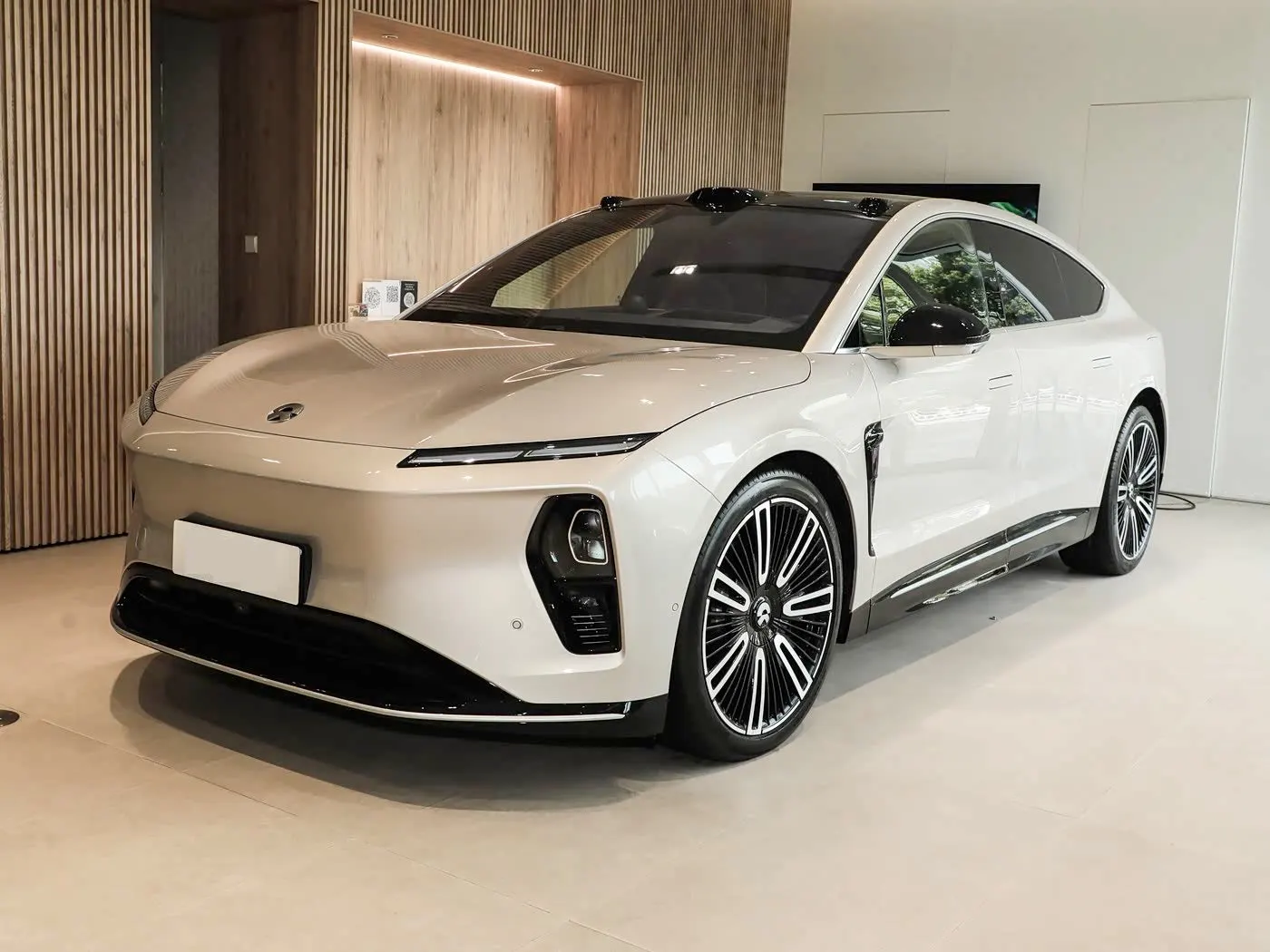

What is China's "9-series" SUV battle?
Three Chinese EV startups — NIO (蔚来), Li Auto (理想), and Xpeng (小鹏) — simultaneously launched their most ambitious flagship SUVs in the first half of 2026. All three are full-size, six-seat vehicles. All three carry a "9" designation, signalling aspiration toward the top of each brand's lineup. The timing is deliberate: the premium SUV segment is where profitability and brand credibility against established luxury names is won or lost.
NIO launched the ES9 on 27 May 2026. Xpeng launched the GX on 20 May. Li Auto launched the L9 Livis on 15 May. Thirteen days separated all three launches. The Xpeng GX secured 24,863 firm orders in the first 12 hours after launch — the strongest market signal of the three at launch.
For international dealers and fleet buyers, the question is not which brand has the best press release. It is which vehicle — if and when export becomes available — fits your market's infrastructure, your buyers' expectations, and your margin targets. This guide works through the data.
Full specs comparison: ES9 vs L9 Livis vs Xpeng GX
All figures are manufacturer-stated CLTC unless noted. CLTC range is typically 15–25% higher than real-world figures in mixed driving.
| Parameter | NIO ES9 | Li Auto L9 Livis | Xpeng GX BEV | Xpeng GX EREV |
|---|---|---|---|---|
| Powertrain type | BEV | EREV | BEV | EREV |
| Price (yuan) | 498,000 / 390,000 BaaS | 559,800 | 279,800–359,800 | 289,800–359,800 |
| Price (USD approx) | $73,500 / $57,500 BaaS | $82,500 | $41,000–$53,000 | $42,500–$53,000 |
| Length | 5,365 mm | 5,255 mm | 5,265 mm | 5,265 mm |
| Wheelbase | 3,250 mm | 3,125 mm | 3,115 mm | 3,115 mm |
| Battery capacity | 102 kWh | 72.7 kWh | 91.9 / 110 kWh | 63.3 kWh |
| EV range (CLTC) | 580–620 km | 340–420 km | 665–750 km | 430 km |
| Combined range | — | 1,650 km | — | 1,585 km |
| Peak system power | 520 kW (697 hp) | ~400 kW | 270–430 kW | 370 kW |
| 0–100 km/h | 4.3 s | ~4.5 s | ~4.2 s (AWD) | ~5.0 s |
| Electrical architecture | 900V | 800V | 800V | — |
| Charging | 5C + battery swap | 5C supercharge | 5C supercharge | Standard AC/DC |
| Seating | 4 / 6 / 7 | 6 | 6 | 6 |
| AI compute (TOPS) | 2,048 | 2,560 | 750–3,000 (by trim) | |
| AI chips | 2× NIO NX9031 | 2× Li Auto Mach M100 | 2–4× Xpeng Turing | |
| Launch date | 27 May 2026 | 15 May 2026 | 20 May 2026 | |
Source any of these three flagships for your market
Get a FOB price, shipping estimate, and homologation briefing for NIO ES9, Li Auto L9 Livis, or Xpeng GX — direct from our sourcing team.
NIO ES9: The pure-electric executive flagship
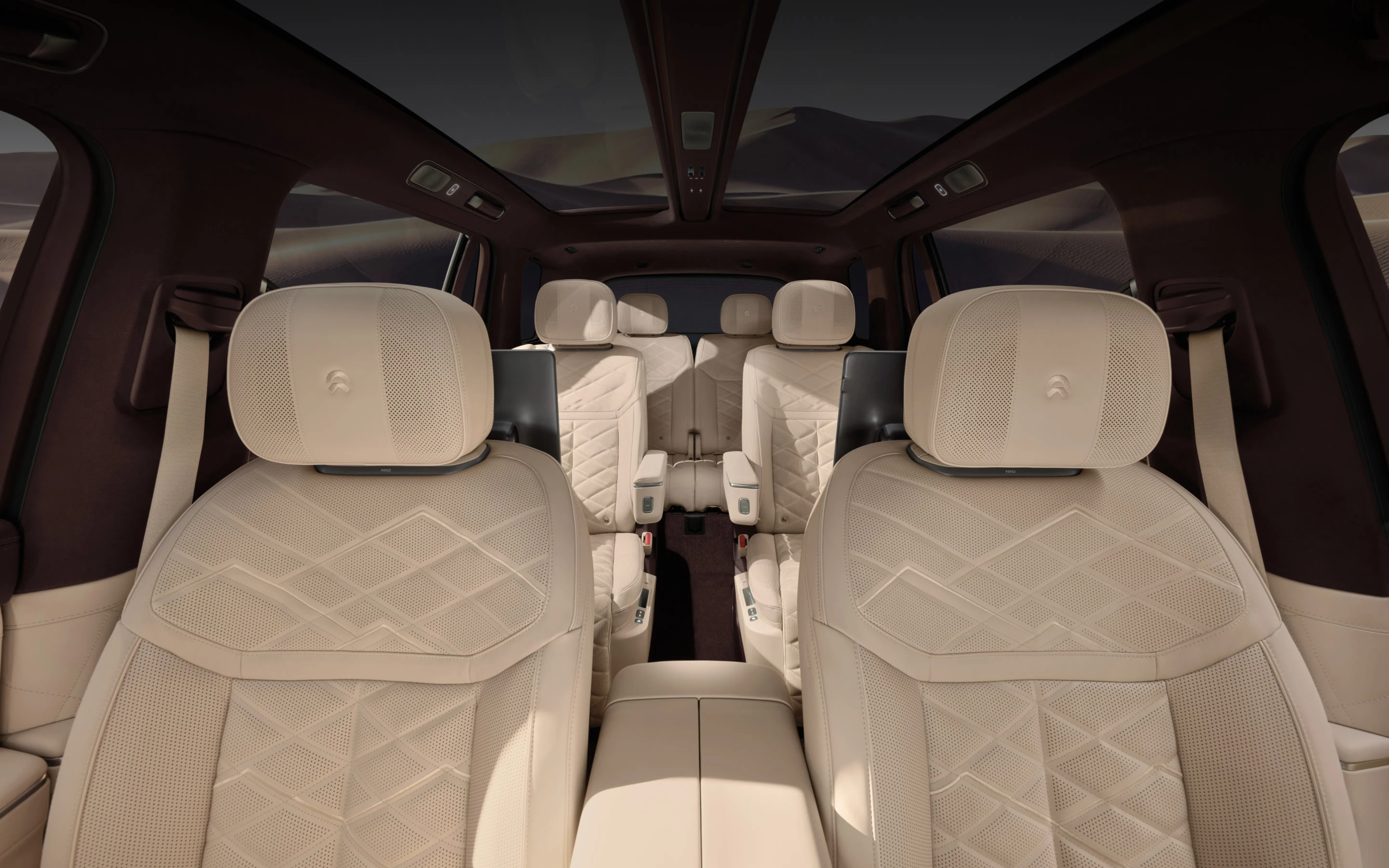
NIO ES9 cabin: six-seat layout with 42-point massage programme in the rear captain chairs. Photo: EVKX.
The NIO ES9 is the largest vehicle in this comparison — 5,365 mm long on a 3,250 mm wheelbase — and the only one committed to pure battery-electric power. There is no range extender option, no EREV alternative. NIO is betting that its 900V architecture combined with 5C ultra-fast charging and a 3-minute battery swap solves the charging anxiety problem entirely.
What makes the ES9 distinct
Battery swap ecosystem. NIO's signature advantage: swap the entire 102 kWh CATL pack in three minutes at a NIO swap station, bypassing the charging queue entirely. For buyers in markets with NIO infrastructure — select European countries — this is a genuine differentiator. For markets without NIO stations, it is irrelevant and the ES9's charging speed (5C, ~20 minutes to 80%) must stand alone.
Seat configuration flexibility. The ES9 is the only one of the three offering 4-seat, 6-seat, and 7-seat configurations. An executive buyer wanting a private rear suite picks the 4-seat layout with the 42-point rear massage programme. A family dealer offering a multi-row vehicle picks the 7-seat bench. No other vehicle here offers this range.
BaaS pricing model. At 390,000 yuan with battery rental versus 498,000 yuan with battery ownership, BaaS lowers the purchase barrier by 108,000 yuan — but commits the buyer to a monthly subscription and infrastructure dependency. Evaluate this carefully for markets where NIO swap infrastructure is uncertain.
- 5,365 × 2,029 × 1,870 mm body; 3,250 mm wheelbase — the largest of the three
- 102 kWh CATL battery; 580–620 km CLTC range (trim-dependent)
- 520 kW / 697 hp dual-motor AWD; 700 Nm torque; 0–100 in 4.3 s
- SkyRide fully active suspension; steer-by-wire; rear-wheel steering
- 2,048 TOPS compute via 2× proprietary NX9031 chips
- 900V architecture; 5C charging; 3-minute swap at NIO stations
- China deliveries from 1 June 2026; no confirmed export timeline
Li Auto L9 Livis: The EREV family champion
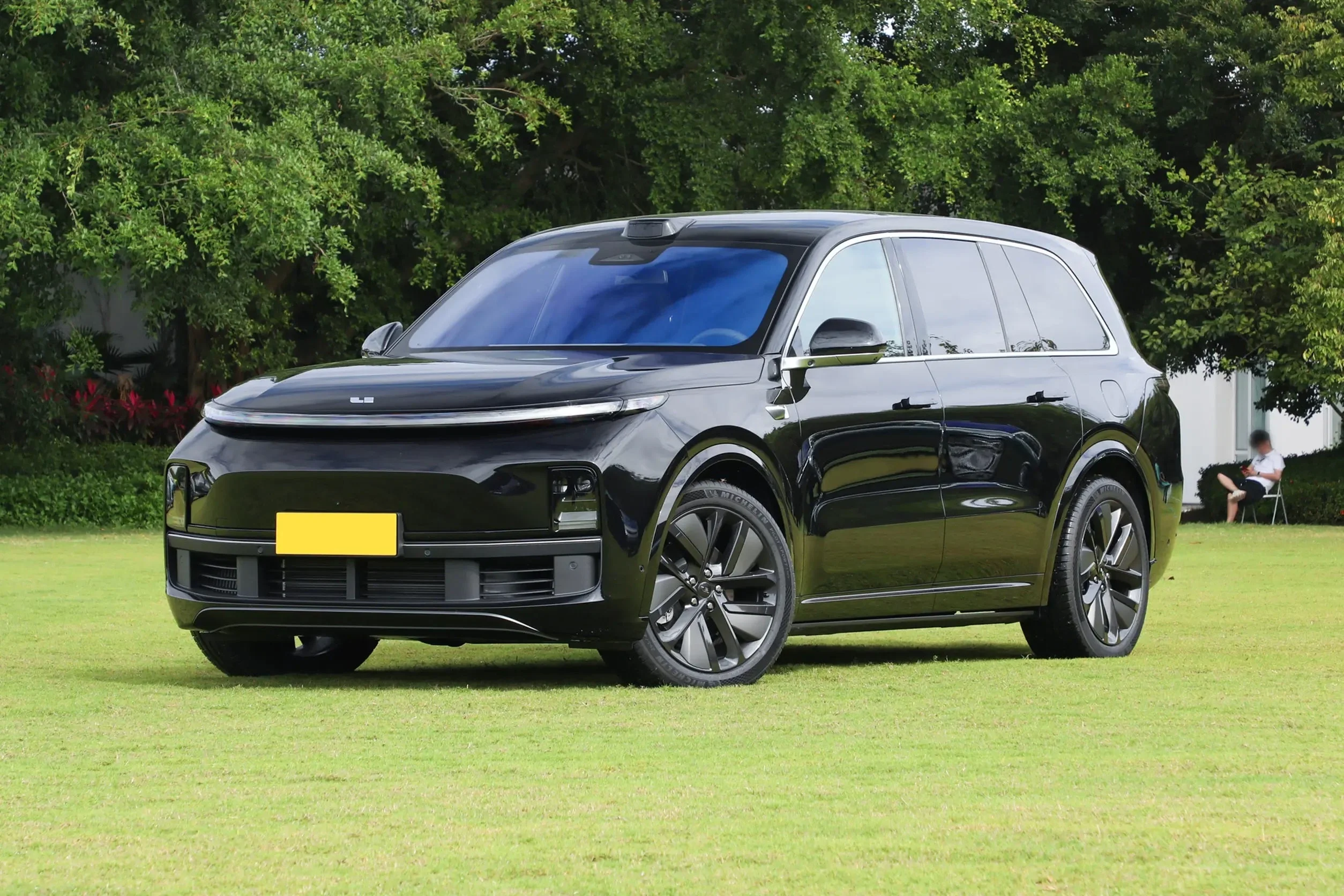
The Li Auto L9 Livis is the most expensive vehicle in this comparison at 559,800 yuan and the most technically advanced in chassis terms. It adopts an 800V fully active suspension capable of 10,000 Newtons of force per wheel independently — a specification that, combined with steer-by-wire, four-wheel steering, and fully electronic mechanical braking, puts it in direct competition with the Porsche Cayenne Turbo GT and Mercedes GLS 63 on chassis sophistication metrics alone.
What makes the L9 Livis distinct
EREV range advantage for real markets. With a 72.7 kWh battery for 340–420 km of pure electric driving and a 1.5L petrol generator for a 1,650 km combined range, the L9 Livis is the practical choice for markets where charging infrastructure is sparse or unreliable. Buyers drive electrically day-to-day and use the petrol extender for long trips or emergencies. Fuel consumption with a fully depleted battery is 6.4 L/100 km — acceptable for a 2.8-tonne SUV.
Compute and chassis synergy. 2,560 TOPS via two Mach M100 chips (Li Auto's proprietary AI silicon) feeds the active chassis systems and the advanced driver assistance stack simultaneously. The fully active suspension adjusts each corner independently 1,000 times per second, which matters for ride quality on poor-quality roads common in emerging markets.
Six seats only. Unlike the ES9, the L9 Livis is configured as a fixed 6-seat (2+2+2) layout. There is no 7-seat option and no 4-seat executive variant. Family dealers will find the second-row captain chairs suitable; fleet buyers needing maximum capacity should consider the ES9.
- 5,255 × 2,000 × 1,810 mm body; 3,125 mm wheelbase
- 72.7 kWh NMC battery (CATL); 340–420 km CLTC EV range; 1,650 km combined
- 1.5L range extender (115 kW); 6.4 L/100 km depleted-battery consumption
- ~400 kW system power; top speed 200 km/h
- 800V fully active suspension (10,000 N per wheel); steer-by-wire; 4-wheel steering; EMB
- 2,560 TOPS via 2× Mach M100 proprietary chips
- Priced at 559,800 yuan ($82,500 approx); L9 Ultra (standard) at 459,800 yuan
Xpeng GX: The AI-first value disruptor
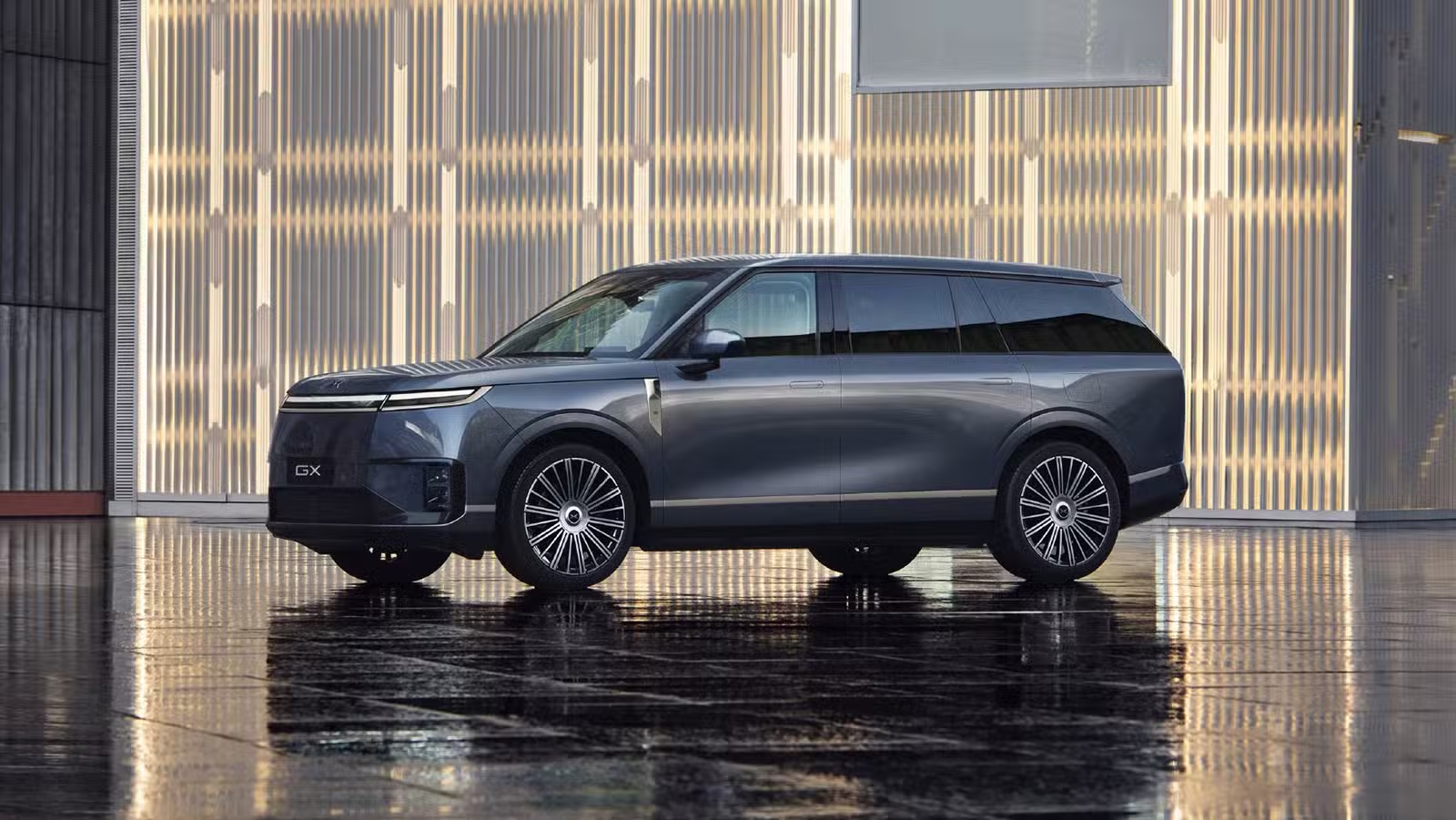
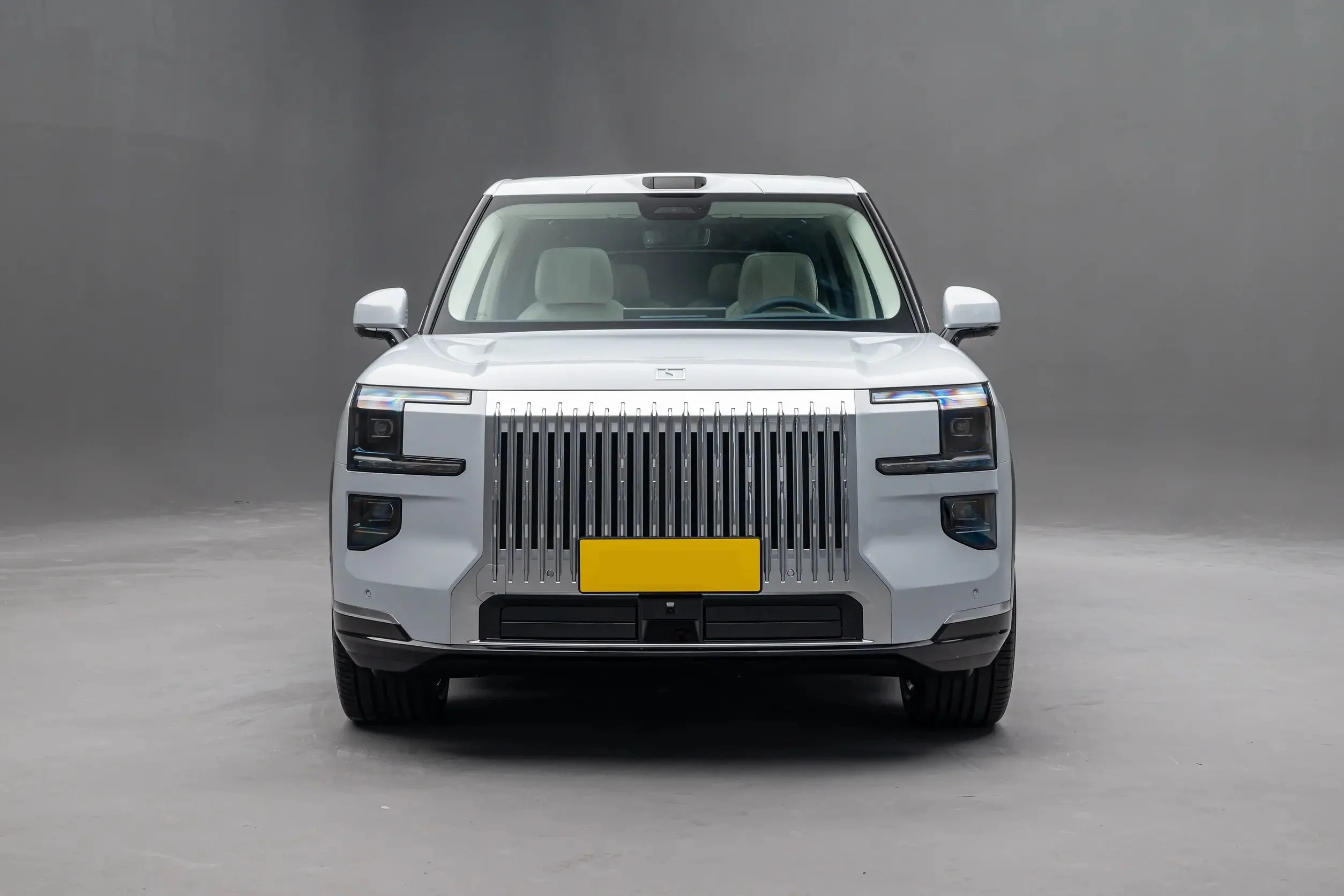
Xpeng GX at the 2026 Beijing Auto Show. Photo: CnEVPost.
The Xpeng GX secured 24,863 firm orders in its first 12 hours on sale — more than the other two posted in their first days combined. The reason is straightforward: it starts at 279,800 yuan ($41,000), offers both BEV and EREV powertrain options, and in its top trim delivers more autonomous driving compute than either rival. It is the only vehicle here that lets a dealer pick the powertrain based on market infrastructure rather than the manufacturer's strategy.
What makes the GX distinct
Powertrain flexibility. No other vehicle in this comparison offers both BEV and EREV configurations at launch. The BEV GX targets buyers in charging-capable urban markets with 750 km CLTC range (110 kWh battery, top trim) and 5C charging on an 800V platform. The EREV GX targets buyers in markets with limited infrastructure: 430 km of electric range plus 1,585 km combined. Both variants share the same 5,265 mm body and six-seat layout.
Tier-based compute model. The GX is sold in four AI compute tiers: Max (750 TOPS, 2 Turing chips), Ultra SE (1,500 TOPS), Ultra (2,250 TOPS), and L4 Robo (3,000 TOPS, 4 Turing chips). Buyers can match compute investment to their market's ADAS regulatory environment — important for dealers in markets where full autonomy is not yet legal or commercially relevant.
Price gap. The entry GX BEV at 279,800 yuan is 43% below the NIO ES9 and 50% below the Li Auto L9 Livis. At this price, Xpeng is not just competing in the premium segment — it is redefining what the entry point to a full-size, six-seat, steer-by-wire, 5C-capable SUV costs.
- 5,265 mm long; 3,115 mm wheelbase; 2+2+2 six-seat layout
- BEV: 91.9 kWh (665 km CLTC, single motor 270 kW) or 110 kWh (750 km CLTC, AWD 430 kW)
- EREV: 63.3 kWh battery; 430 km CLTC EV + 1,585 km combined; 370 kW system power
- Steer-by-wire standard; semi-active suspension; L4-ready hardware pre-wiring
- Second-generation VLA autonomous driving; vision-based without roof LiDAR
- BEV from 279,800 yuan ($41,000); EREV from 289,800 yuan ($42,500)
- 24,863 firm orders in 12 hours — strongest initial market signal of the three
For international dealers in LHD markets, the Xpeng GX EREV is the most commercially viable of the three — priced 50% below the L9 Livis, offering powertrain flexibility that neither rival provides, and recording near-25,000 firm orders at launch. The NIO ES9's battery-swap ecosystem is compelling in markets with NIO infrastructure, but requires infrastructure investment that most international dealers cannot control. The L9 Livis at 559,800 yuan commands a premium that export markets will take time to accept. The GX EREV at under 290,000 yuan changes the conversation.
Autonomous driving compared: TOPS, chips, and real-world capability
All three vehicles use proprietary AI silicon developed in-house — a trend driven by geopolitical chip supply constraints and the desire to vertically integrate the software stack. Raw TOPS figures are useful for comparison but do not directly translate to real-world ADAS performance. Sensor configuration, software quality, and regulatory approval in each market matter more for day-to-day operation.
| Vehicle | Chips | Max TOPS | Sensor approach | Autonomy level (claimed) |
|---|---|---|---|---|
| NIO ES9 | 2× NIO NX9031 | 2,048 | Camera + radar + LiDAR | L3 (conditional) |
| Li Auto L9 Livis | 2× Li Auto Mach M100 | 2,560 | Camera + radar + 4 LiDAR | L3 (conditional) |
| Xpeng GX (Max) | 2× Turing | 750 | Vision-based (no roof LiDAR) | L2+ |
| Xpeng GX (L4 Robo) | 4× Turing | 3,000 | Vision-based + hardware pre-wired for L4 | L4 hardware-ready |
The key practical distinction: the L9 Livis uses 4 LiDAR units for its sensor stack, while the Xpeng GX L4 Robo relies on vision-based systems without roof LiDAR — claiming equivalent coverage through compute density and camera resolution. NIO's ES9 sits between the two. For dealers, the relevant question is whether your destination market's ADAS regulations allow higher autonomy levels — if not, the compute tier matters less than the entry price.
BEV vs EREV: what the powertrain choice means for your market
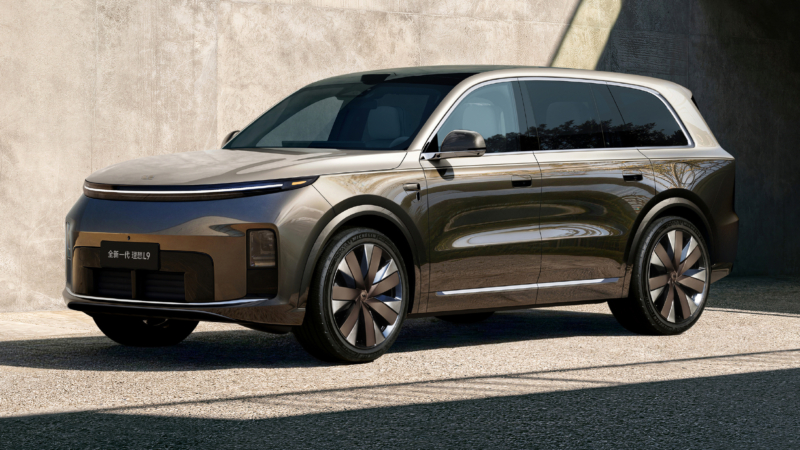
Li Auto L9 Livis exterior. With 1,650 km combined range, it is the logical choice for markets where daily charging is unreliable. Photo: CarNewsChina.
The powertrain question is where this comparison becomes most useful for dealers outside China. The ES9 is BEV-only; the L9 Livis is EREV-only; the GX offers both. The right choice depends on your market's infrastructure reality, not the manufacturer's positioning.
When BEV makes sense
Choose BEV (ES9 or GX BEV) when your target market has reliable public charging networks, buyers have predictable daily driving patterns under 400 km, and fast-charging infrastructure (150 kW+) is accessible on major routes. Northern Europe, Gulf states with modern charging networks, and major ASEAN cities with established EV infrastructure fit this profile. The Xpeng GX BEV's 750 km CLTC range (top trim) provides meaningful buffer even where charging is sparse.
When EREV makes sense
Choose EREV (L9 Livis or GX EREV) when your market has limited or unreliable charging infrastructure, buyers make frequent long-distance trips beyond 400 km, or petrol availability is more reliable than charging. Sub-Saharan Africa, South and Southeast Asia, Latin America, and Middle Eastern markets outside major cities generally fit this profile. The 1,585–1,650 km combined range eliminates range anxiety entirely — buyers can refuel at any petrol station and treat the electric motor as a running cost reduction, not an infrastructure dependency.
The GX advantage: market-by-market flexibility
A dealer operating across multiple markets — say, UAE (good charging) and Nigeria (limited charging) — faces a sourcing decision that the GX simplifies: order BEV for UAE, EREV for Nigeria, same vehicle, same parts, same service knowledge. Neither the ES9 nor the L9 Livis gives you that option.
International availability: what dealers need to know now
As of May 2026, all three models are officially sold in China only. Export timelines vary significantly by brand.
NIO ES9: NIO has an established European presence with swap stations in Norway, Germany, Netherlands, Denmark, and Sweden. The ES9 may follow the ES8 into these markets, but no launch timeline has been confirmed. NIO's BaaS model is infrastructure-dependent — dealers targeting markets without NIO swap stations should plan around the full-purchase price. NIO is the most internationally experienced of the three brands.
Li Auto L9 Livis: Li Auto's international export programme is in very early stages — similar to the situation described in our Li Auto L-Series guide. No EU or UK type approval has been confirmed. LHD only. Dealers should treat this as a medium-term opportunity (2027+) rather than a near-term purchase.
Xpeng GX: Xpeng sells vehicles in Norway, Sweden, Netherlands, Germany, Denmark, and France, and has established European type-approval processes. The GX has not been confirmed for export as of this writing, but Xpeng's export infrastructure is the most developed of the three brands. Watch for export announcements in H2 2026.
RHD availability: None of the three offer right-hand drive. UK, Australia, Japan, Thailand, South Africa, India, Malaysia, and other RHD markets cannot source any of these vehicles in the correct drive configuration. This is a hard constraint — confirm LHD viability in your market before evaluating any of these models.
Grey-market sourcing: B2B importers can source all three through grey-market channels. This bypasses manufacturer warranty and requires independent homologation. Confirm type-approval requirements in your destination before proceeding.
How to choose: 6-step dealer decision guide
-
1
Confirm LHD market viability. All three vehicles are left-hand drive only. If your target market requires RHD (UK, Australia, Japan, Thailand, South Africa), none of these three are currently available in a compliant configuration. Stop here and evaluate alternatives.
-
2
Assess charging infrastructure in your market. If your buyers have reliable access to fast chargers on daily routes: BEV is viable. If charging is sparse, unreliable, or your buyers make frequent long-distance trips: EREV is the safer commercial choice. This single factor determines your vehicle shortlist.
-
3
Match powertrain to infrastructure verdict. EREV markets → Li Auto L9 Livis or Xpeng GX EREV. BEV markets → NIO ES9 or Xpeng GX BEV. Mixed/multi-market operation → Xpeng GX (the only model offering both). If you need BEV-and-EREV from one model line, GX is the only answer here.
-
4
Set your FOB budget ceiling. Under $55,000 FOB → Xpeng GX (BEV or EREV, all trims). $55,000–$80,000 FOB → NIO ES9 (BaaS pricing) or GX top trim. Above $80,000 FOB → Li Auto L9 Livis. Remember FOB does not include shipping, duty, homologation, or local compliance costs.
-
5
Evaluate NIO's BaaS model for your market. If NIO swap infrastructure exists or is planned in your country: BaaS at 390,000 yuan ($57,500) changes the ES9's value equation significantly. If no NIO infrastructure exists or is planned: price the ES9 at 498,000 yuan ($73,500) and compare on that basis.
-
6
Verify export timeline before committing inventory. None of the three are in confirmed export production as of May 2026. Contact each brand's international sales team, obtain written delivery timelines, and do not commit buyer deposits against vehicles without confirmed production slots. Export programmes can shift 6–12 months on short notice.
Common questions
What is the difference between NIO ES9, Li Auto L9 Livis, and Xpeng GX?
The NIO ES9 is a pure BEV executive flagship with a 102 kWh battery for 580–620 km CLTC range and battery-swap capability, priced from 498,000 yuan (390,000 yuan BaaS). The Li Auto L9 Livis is an EREV with a 72.7 kWh battery for 340–420 km electric range and 1,650 km combined, priced at 559,800 yuan. The Xpeng GX offers both BEV (750 km CLTC) and EREV (1,585 km combined) options starting from 279,800 yuan — making it the most affordable and most flexible powertrain choice of the three.
Which has the longest range — NIO ES9, L9 Livis, or Xpeng GX?
In pure electric range, the Xpeng GX BEV leads with 750 km CLTC (110 kWh top trim). The NIO ES9 reaches 620 km CLTC (102 kWh). The Li Auto L9 Livis reaches 340–420 km CLTC (72.7 kWh). For combined range including the range extender: the L9 Livis reaches 1,650 km and the GX EREV reaches 1,585 km. The NIO ES9 is BEV-only with no combined range figure. Reduce all CLTC figures by 15–25% for real-world mixed driving estimates.
Is the Xpeng GX available in both BEV and EREV versions?
Yes. The Xpeng GX is the only one of the three to offer both powertrain options at launch. The BEV version starts at 279,800 yuan with 665–750 km CLTC range depending on trim. The EREV version starts at 289,800 yuan with 430 km CLTC pure electric range and 1,585 km combined. Both share the same 5,265 mm body and 2+2+2 six-seat layout. The EREV top trim and BEV top trim are both priced at 359,800 yuan.
What does NIO's battery swap mean for international buyers?
NIO's BaaS (battery-as-a-service) programme allows buyers to purchase the ES9 without the battery pack at 390,000 yuan instead of 498,000 yuan, paying a monthly subscription for battery access and swap capability. A full battery swap takes approximately 3 minutes at a NIO Power swap station. For international markets this requires NIO swap station infrastructure — currently operational in Norway, Germany, Netherlands, Denmark, and Sweden. Markets without NIO infrastructure should budget for the full 498,000 yuan purchase price and factor in that fast charging (5C) is available without BaaS.
Which is cheapest: Xpeng GX, NIO ES9, or Li Auto L9 Livis?
The Xpeng GX is significantly the most affordable, starting at 279,800 yuan ($41,000 USD approx) for the BEV Max trim and 289,800 yuan ($42,500) for the EREV entry trim. This is approximately 43% below the NIO ES9 at 498,000 yuan ($73,500) and 50% below the Li Auto L9 Livis at 559,800 yuan ($82,500). The NIO ES9 can be accessed at 390,000 yuan ($57,500) via BaaS battery rental, though that requires NIO infrastructure and ongoing subscription fees. All figures are China ex-factory; add freight, duty, and local compliance costs for landed pricing.
Are NIO ES9, Li Auto L9 Livis, and Xpeng GX available outside China?
As of May 2026, all three models are officially sold in China only. NIO has an established European presence and may extend the ES9 to those markets — no confirmed timeline. Xpeng sells in several European markets and has the strongest export infrastructure of the three, but the GX has not been confirmed for export. Li Auto is primarily a China-market brand with a very early-stage export programme. Grey-market sourcing through B2B importers is possible for all three; confirm homologation and type-approval requirements for your destination country before committing to an order. Contact us for a current sourcing assessment for your market.
What is the difference between 3,000 TOPS and 2,048 TOPS compute?
TOPS (Trillion Operations Per Second) measures raw AI chip throughput for tasks including sensor fusion, object detection, and path planning. The Xpeng GX L4 Robo variant delivers 3,000 TOPS via four Turing AI chips. The Li Auto L9 Livis delivers 2,560 TOPS via two Mach M100 chips. The NIO ES9 delivers 2,048 TOPS via two NX9031 chips. Higher TOPS enables more simultaneous sensor inputs and faster decision cycles — but real-world ADAS performance also depends on software quality, sensor hardware configuration, and regulatory approval in each market. For dealers, the relevant question is what ADAS level is legally permitted and commercially relevant in your destination, not the chip spec.
Do NIO ES9, Li Auto L9 Livis, or Xpeng GX offer right-hand drive (RHD)?
No. All three models are left-hand drive only as of May 2026. There is no confirmed RHD production programme for any of the three. Dealers targeting RHD markets — UK, Australia, Japan, Thailand, South Africa, India, Malaysia, and others — cannot currently source any of these three vehicles in a compliant configuration. This is a hard constraint. Confirm LHD viability in your target market before proceeding with any sourcing inquiry for these models.
Further reading
Ready to source China's next flagship SUV?
Tell us your target market, budget, and powertrain preference. We will confirm current export availability, FOB pricing, and logistics for NIO ES9, Li Auto L9 Livis, or Xpeng GX.